
North Carolina Employment Projections 2024 - 2034
Part 2: Regional Industry Trends
North Carolina’s economy is expected to grow, but that growth will not be evenly distributed across industries or regions. More than 260,000 jobs are projected to be added statewide between 2024 and 2034, but the industries driving that growth and where it occurs will vary significantly across the state.
The projections reflect trends across 16 regional labor markets in North Carolina based on the state’s eight Prosperity Zones. Six of the eight Prosperity Zones are split in two, while Charlotte remains intact, and the Southeast Prosperity Zone has 3 sub-regions: Goldsboro-Kinston, Jacksonville-New Bern, and Wilmington.
Where Growth Is Concentrated
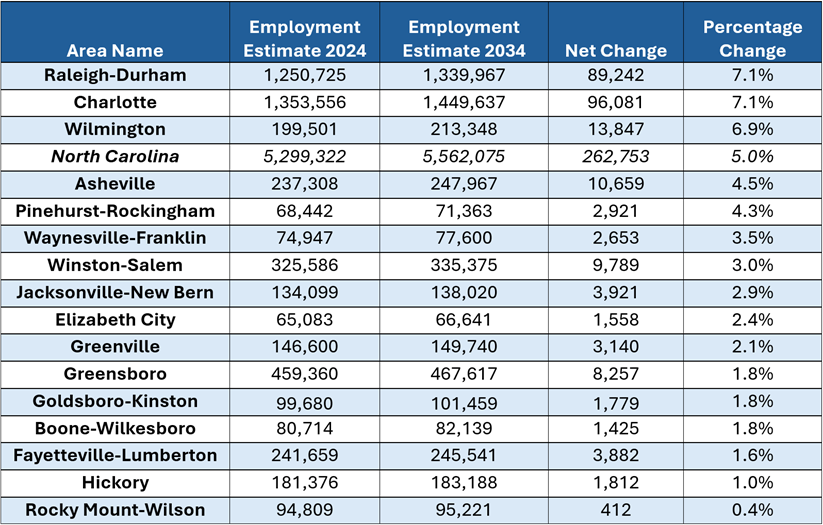
All regions are expected to see employment gains, with three metropolitan areas (Raleigh-Durham, Charlotte, and Wilmington) anticipated to exceed the statewide growth rate. Other regions will continue to grow as well, though at a more modest pace, reflecting differences in local industry mix and economic conditions. In western North Carolina, projected growth also reflects a long-term recovery from Hurricane Helene, with areas like Asheville expected to return to pre-storm trends over time.
Table 1 – Total, All Industries Growth by Region
Service Industries Will Drive Growth Across Regions
The Service-Providing sector is expected to lead job growth across all regions.
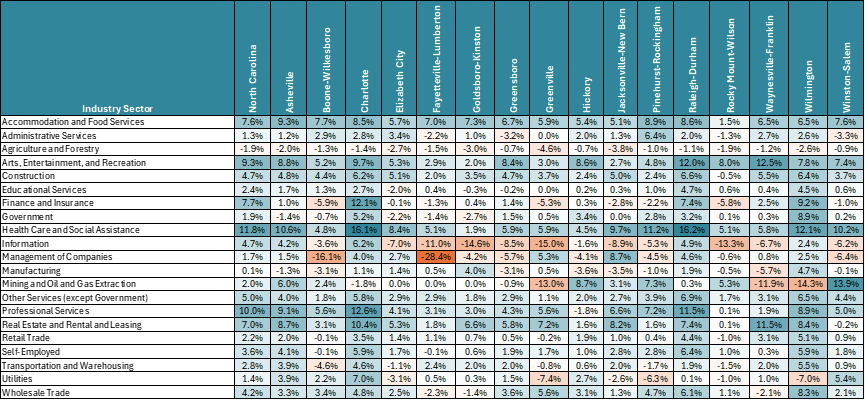
Health Care and Social Assistance stands out as the primary sector driving job growth in most regions. Within this sector, Ambulatory Health Care Services are expected to account for a large share of new jobs, reflecting continued demand for healthcare services. Other service industries, such as Professional and Technical Services, Finance and Insurance, and Accommodation and Food Services, are also expected to grow across multiple regions.
Together, these trends reflect the continued shift toward a more service-based economy across the state.
Goods-Producing Industries Show More Variation
In contrast to the consistent growth in services, Goods-Producing sector shows more mixed patterns across regions. While many regions are expected to add jobs in construction and certain manufacturing industries, others may see little change or slight declines depending on local economic conditions.
Most regions are projected to see some growth in Goods-Producing industries. However, five regions - Pinehurst-Rockingham, Boone-Wilkesboro, Rocky Mount-Wilson, Greensboro, and Hickory - are expected to experience slight declines, though in most cases the decrease is less than one percent.
These differences highlight how industry trends at the regional level are shaped not only by statewide patterns but also by the unique economic characteristics of each area.
The map below highlights the industry sectors expected to drive the most job growth in each region across the state. In most regions, Healthcare is the leading source of job growth, though other industries such as Manufacturing and Hospitality play a larger role in some areas.
Figure 1: NC Top Projected Growth Sectors by Region, 2024-2034
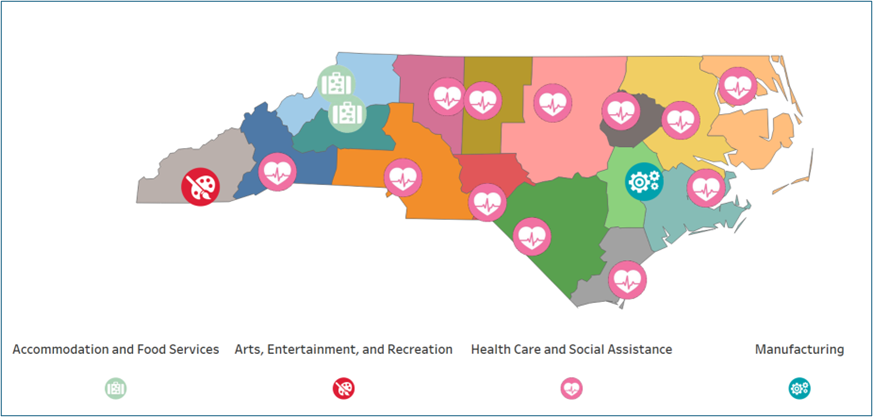
Table 2 – Projected Industry Employment Percentage Growth by Region (2024–2034)
What About Artificial Intelligence (AI)?
The projections already account for the impact of technological change, including AI. Like other long-term projections, they assume that new technologies will reshape how work is performed over time rather than cause sudden, large-scale changes in employment.
AI is expected to affect some industries more than others, particularly those with a higher share of routine tasks, but its impact is reflected as gradual change within the projections.
What Industry Employment Projections Matter
These insights can inform a wide range of decisions about the future. Workforce boards and economic developers use this data to support strategic planning, allocate resources, and help grow, attract, and retain businesses. Career counselors and job seekers can use it to identify industries with stronger future opportunities. And educational institutions may use it to better align curriculums and training programs with projected regional demand. Overall, these projections help stakeholders better understand potential opportunities and challenges in their communities.
To further explore LEAD’s 2034 employment projections, including detailed industries, visit the projections data table or the Industry Projections dashboard.
This page was last modified on 04/06/2026