
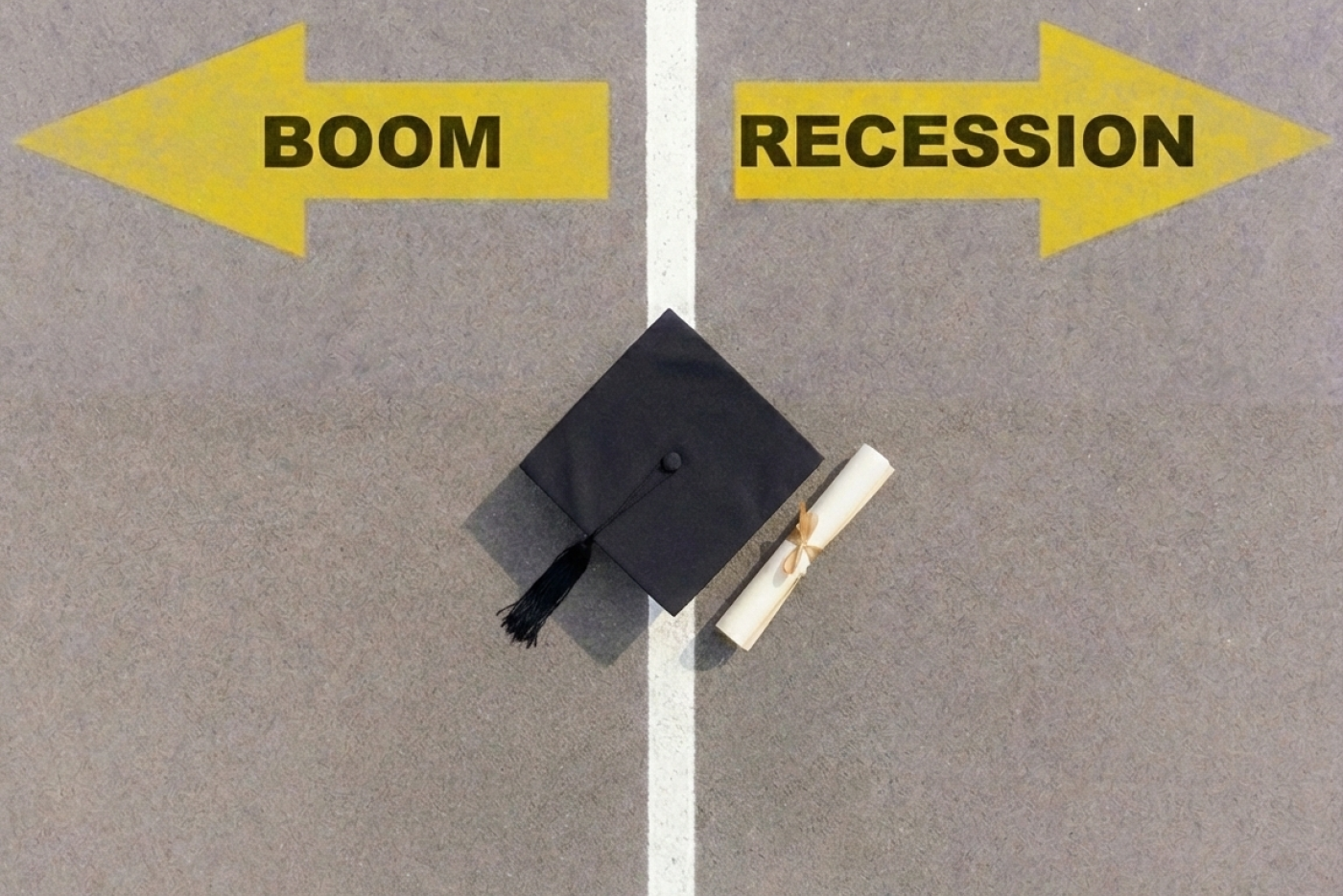
Graduating college is a milestone worth celebrating, but the economy might have its own plans for your career. The timing of your entry into the workforce can dramatically shape your early career trajectory, and as history shows, graduating during a recession can leave more than just a temporary dent in your wallet.
Data from NC TOWER and the Labor Supply and Demand Analyzer spanning 2003 to 2023 reveals a clear pattern: economic conditions at graduation matter a lot. When the 2009 bachelor’s degree graduating cohort stepped into the job market during the Great Recession, they faced a brutal 8.4 jobseekers per opening ratio. The result? An average first-year wage earnings of $28,5331. Fast forward to 2022, and the story flips. Graduates entered the tightest labor market on record, with fewer jobseekers than openings (0.9 per job), landing an average starting wage earnings of $37,803 – a whopping 32% higher than their 2009 counterparts. The takeaway? A strong economy doesn’t just offer more jobs; it sets the stage for higher wages and faster career growth.
Your graduation date might feel like a random point on the calendar, but in reality, it's a ticket to a labor market shaped by forces beyond your control. While you can't control whether you graduate into a boom or a bust, you're not entirely at the mercy of economic cycles. Build resilience by gaining in-demand skills, earning credentials, securing internships, and staying geographically flexible. Economic timing matters, but it doesn't have to define your career trajectory.

More data and insights are available on NC TOWER. The dataset underlying this story can be downloaded here.. For a deeper dive into the data and trends behind these numbers, check out the full analysis.
- 1
All wage figures presented in this article are adjusted to 2023 price level using the Consumer Price Index