

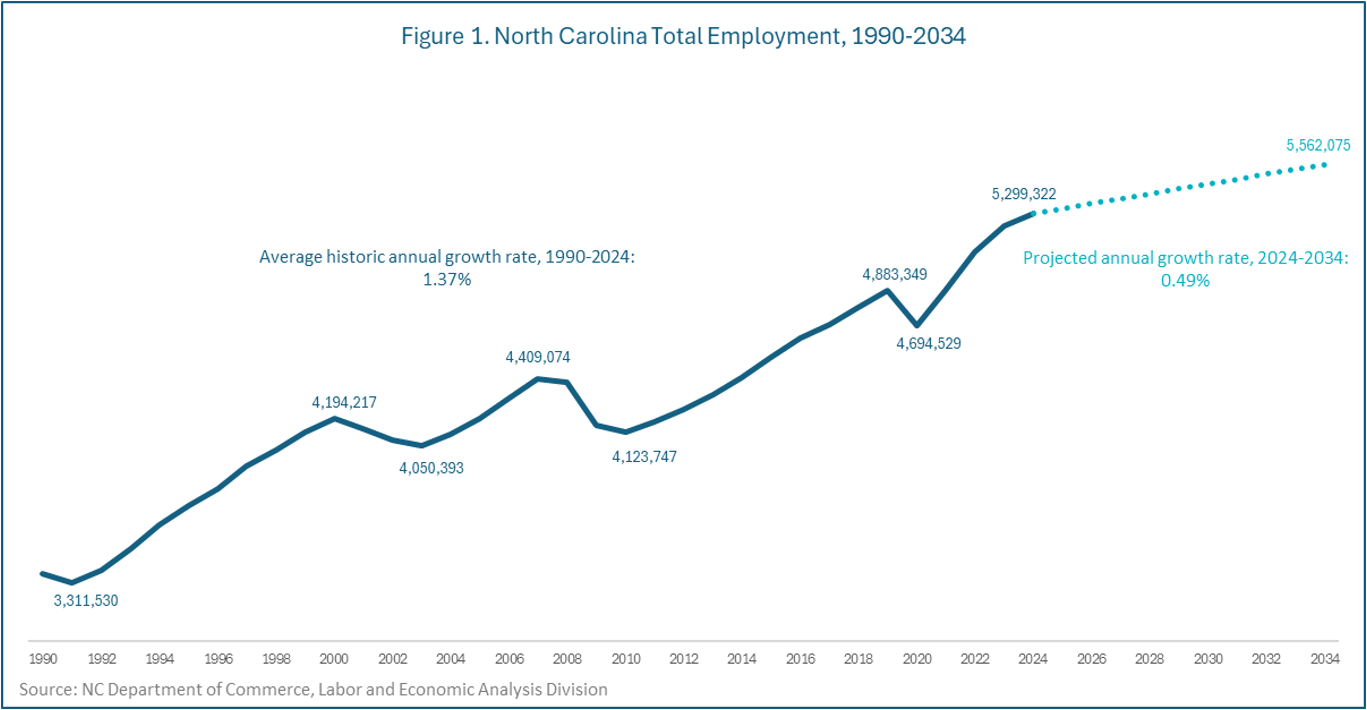
North Carolina’s job market is expected to keep growing over the next decade — but not in the same way as before. The state is projected to add more than 262,700 jobs between 2024 and 2034, growing slightly faster than the national average. But the biggest changes are not just about how many jobs are added – it’s about where growth is happening and what kinds of opportunities will be available.
What’s Changing in North Carolina’s Job Market
1. Most new jobs will be in services - especially healthcare.
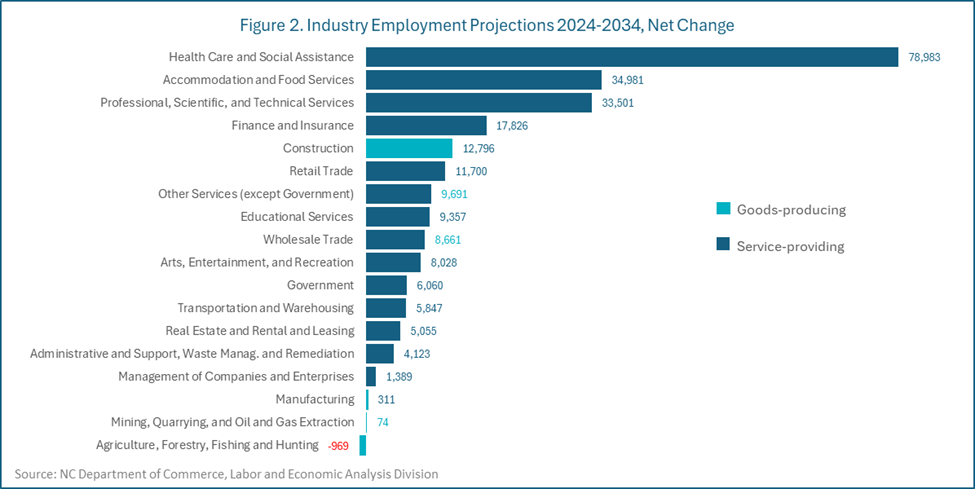
Nearly all job growth (about 91%) is expected to come from service industries. Health Care and Social Assistance alone is projected to add nearly 79,000 jobs, more than any other sector.
2. Manufacturing is no longer a major source of job growth.
Manufacturing employment is expected to remain essentially flat over the next decade, while agriculture-related jobs are projected to decline slightly.
3. Healthcare and tech jobs are growing fastest.
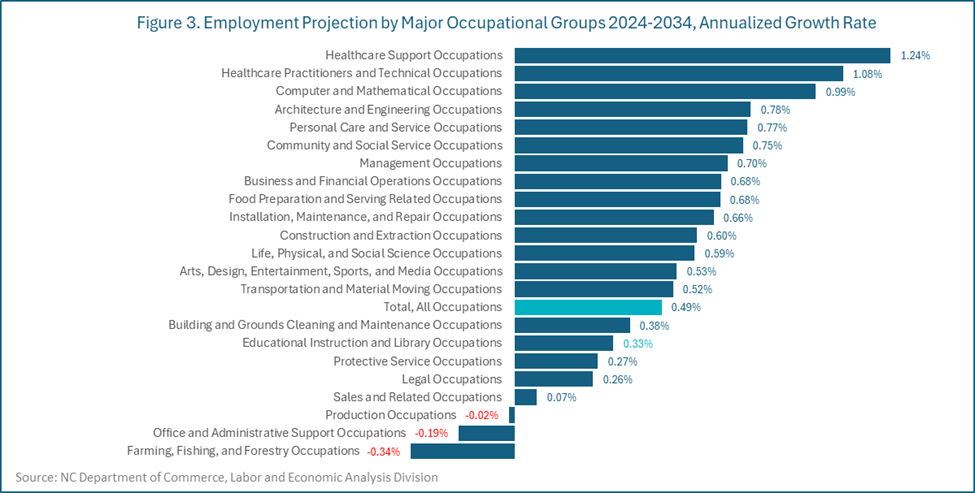
The fastest-growing occupations include:
- Healthcare support roles (such as aides and assistants)
- Healthcare practitioners (such as nurses and physicians)
- Computer and mathematical occupations (such as software developers and data analysts)
These roles reflect growing demand for both care services and technical skills.
4. Most job openings won’t come from new jobs.
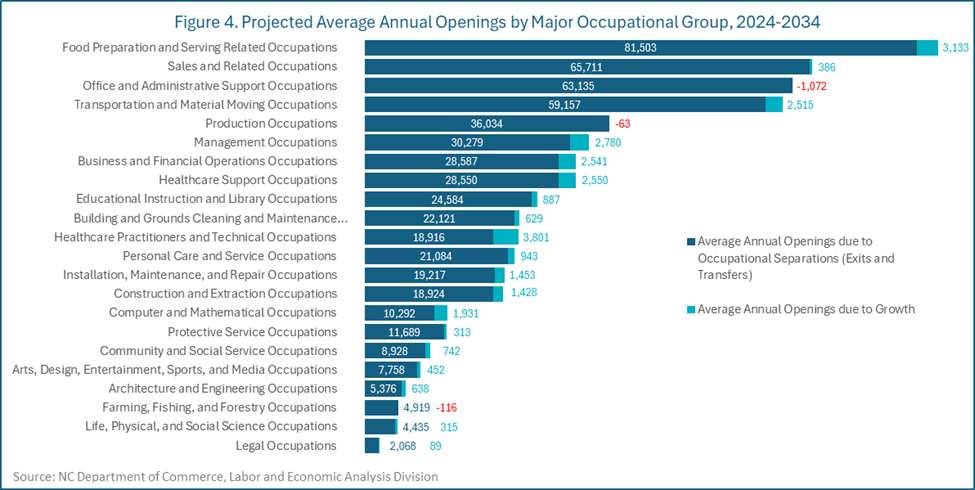
North Carolina is projected to have more than 599,000 job openings each year — but most of these will come from workers leaving jobs or changing occupations, not from new job creation.
This means opportunity exists even in occupations that are not growing.
5. Higher-paying jobs are growing faster—but lower-wage jobs still dominate openings.
Jobs in higher-paying fields — like management, technology, and business — are expected to grow more quickly.
At the same time, occupations that require less formal education will still account for the majority of job openings, largely due to high turnover.
Where the Jobs Will Be
Job growth in North Carolina will be concentrated in a few key industries:
- Health care, driven by an aging population and increased demand for services
- Professional and technical services, including IT and specialized business services
- Hospitality and food services, which continue to see strong demand
- Finance and insurance, particularly in areas like banking and credit services
Together, these industries will shape much of the state’s employment growth over the next decade.
What About Artificial Intelligence (AI)?
The projections already account for the impact of technological change, including AI. Like other long-term projections, they assume that new technologies will reshape how work is performed over time rather than cause sudden, large-scale changes in employment.
AI is expected to affect some industries more than others, particularly those with a higher share of routine tasks, but its impact is reflected as gradual change within the projections.
What This Means for Workers and Employers
These projections point to a labor market with two important realities:
- Growth in high-skill, high-wage jobs, especially in healthcare, technology, and business
- Continued high demand for workers in lower-wage occupations, driven by turnover
Education and training will continue to matter, especially for accessing higher-paying opportunities. But many jobs will still be available to workers without a college degree.
Want to Explore the Data?
To further explore LEAD’s 2034 employment projections, visit the Industry or Occupational projections data tables. The full story on statewide employment projections is available here.