

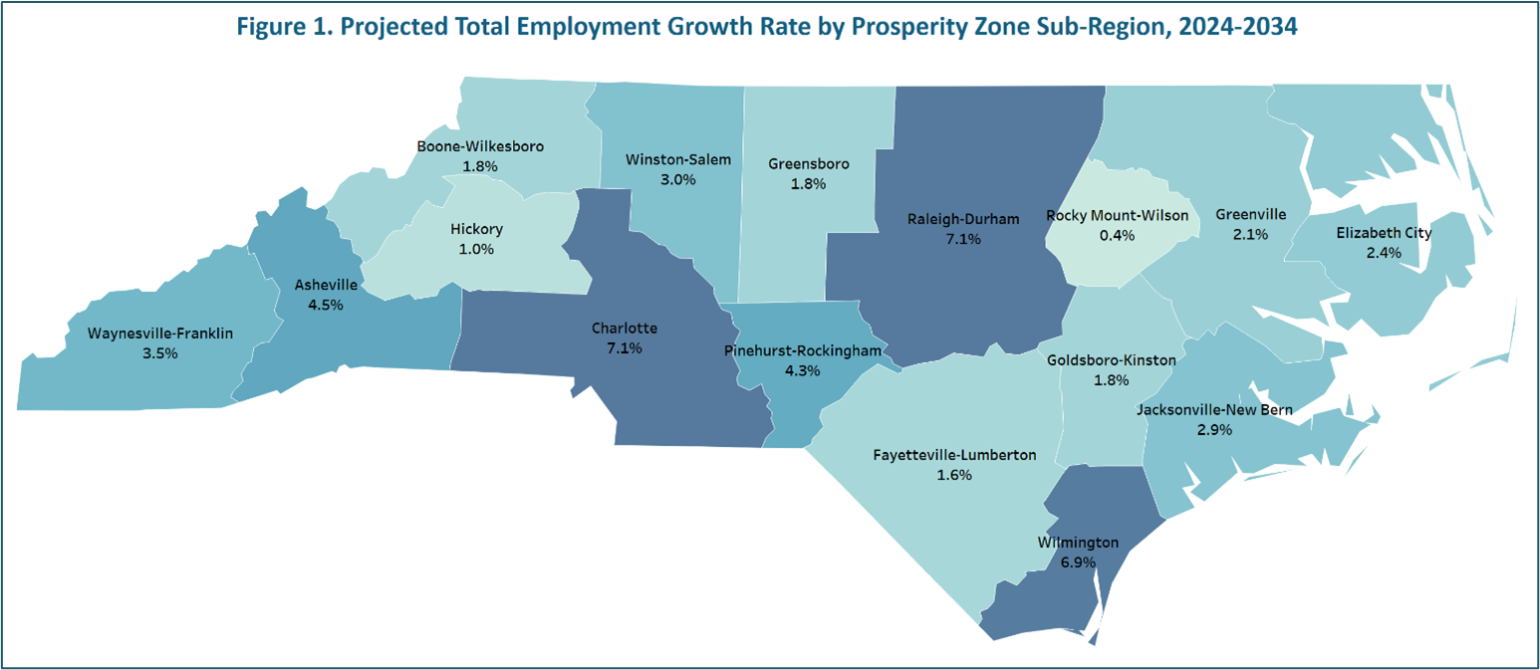
North Carolina’s job market is growing, but not evenly across the state. All regions are expected to add jobs over the next decade, but growth will be concentrated in a few major economic hubs. At the same time, the types of jobs being created and the skills they require will vary widely by region, highlighting the importance of understanding local labor markets.
What’s Changing Across Regions
1. Job growth will be strongest in major metro areas.
Regions like Charlotte, Raleigh-Durham, and Wilmington are expected to see the fastest growth, continuing their role as the state’s primary economic engines. Together, Charlotte and Raleigh-Durham alone will account for a large share of new jobs statewide. Other regions will continue to grow but at a slower pace.
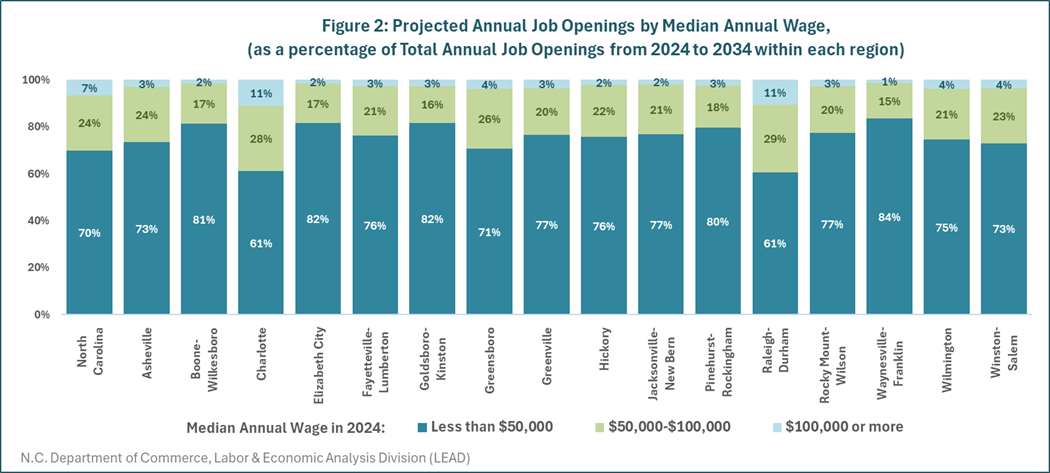
2. High-wage job growth is concentrated in a few regions.
In larger metro areas, more than half of new jobs are expected to pay $50,000 or more, while smaller regions are more likely to see growth in lower-wage occupations. This suggests economic opportunity will increasingly depend on both location and skill level, contributing to widening regional differences in wages and career pathways.
3. Some job trends are consistent statewide.
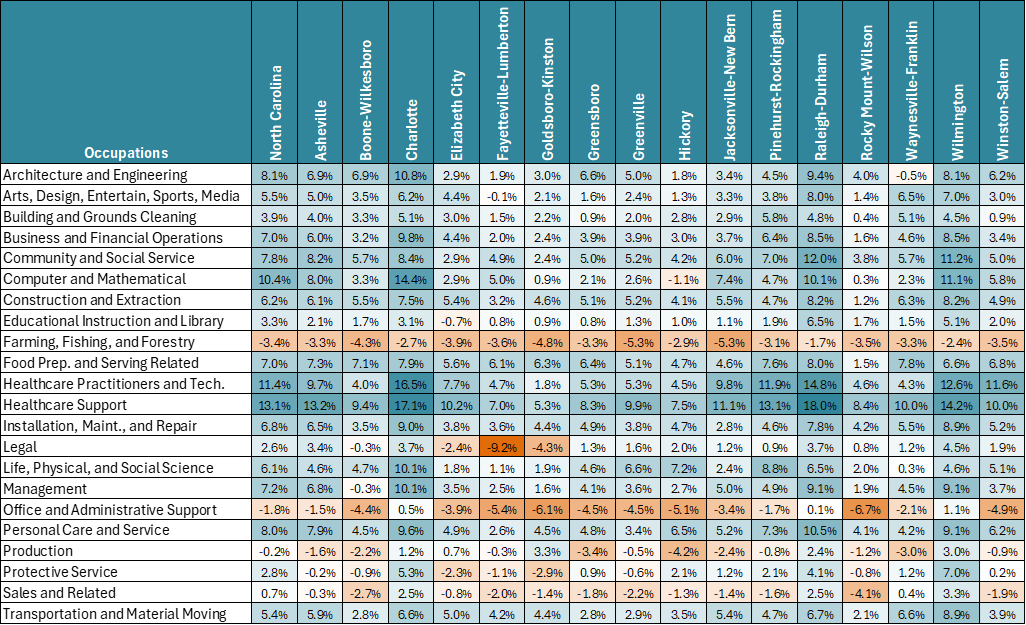
Across nearly all regions, Healthcare and Service jobs are growing, while Food Service jobs are among the largest sources of new jobs and openings. Transportation and Logistics jobs continue to expand. At the same time, Production jobs show mixed results, growing in some regions but declining in others and Farming and Forestry jobs are projected to decline statewide. Together, these trends highlight the continued shift toward service-based work across North Carolina.
4. Some occupations are changing differently depending on the region.
Not all trends are uniform. For example, Office and Administrative jobs are expected to grow slightly in large metro areas but decline in most other regions. Sales jobs show mixed trends, growing in some regions and declining in others. These differences suggest that local economic conditions play a significant role in shaping job opportunities, and statewide trends may not fully reflect regional realities.
5. Most job openings will come from turnover, not new growth.
As in the statewide projections, many job opportunities will come from workers leaving or changing jobs rather than from new positions. This pattern is especially evident in Food service, Transportation and Logistics, and Office Support roles. As a result, even occupations that are not growing may still offer substantial opportunities due to ongoing replacement needs.
Education and Skill Needs Are Shifting
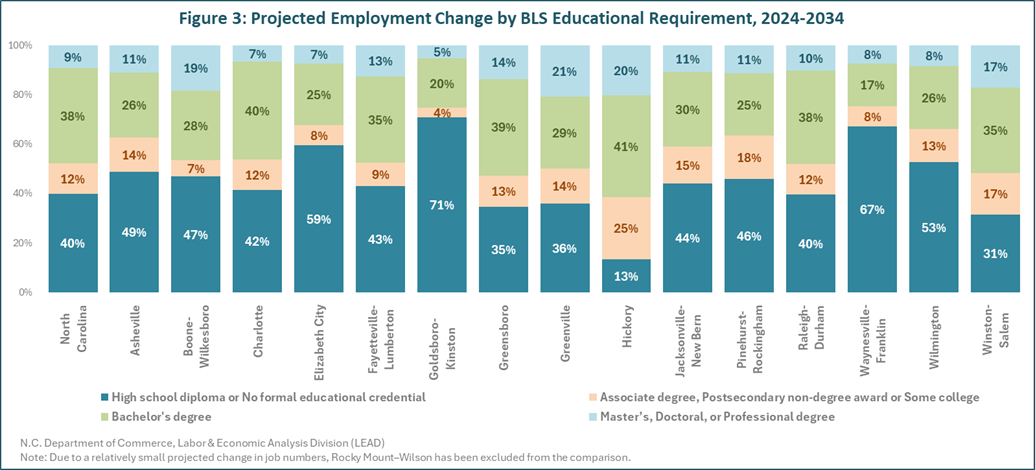
Across all regions, jobs requiring some level of postsecondary education are expected to grow faster than those requiring less education. However, most new jobs will still require no formal education or only a high school diploma, while regions like Raleigh-Durham and Charlotte are expected to have the highest demand for jobs requiring a bachelor’s degree or higher.
This shift indicates that while multiple pathways into the workforce will remain important, access to higher-paying opportunities will increasingly depend on education and training.
What About Artificial Intelligence (AI)?
As discussed earlier in this series, these projections incorporate the expected impact of technologies like AI, reflecting gradual changes in how work is performed rather than sudden shifts in employment.
What This Means for Workforce and Education Partners
These regional trends highlight several important insights:
- Workforce strategies are likely to be more effective when aligned with regional needs.
Regional differences in economic conditions can influence how well strategies translate across different parts of the state. - Education and training pathways play an important role in supporting local demand.
Programs that reflect growing industries and occupations, especially in healthcare, technology, and skilled trades, can help better align workers with available opportunities. - Replacement demand remains a key source of job opportunities.
Many openings are expected to result from workers leaving or changing jobs, not just from new job creation. - Access to higher-wage opportunities is closely tied to skills and education.
Expanding access to post-secondary education and training can help more workers connect to these opportunities.
Want to Explore the Data?
To further explore LEAD’s 2034 employment projections, visit the projections data table or the Occupational Projections dashboard. The full story on regional occupational projections is available here.