

The Common Follow-up System (CFS) provides detailed data on postsecondary degree completion in North Carolina. Using this data, we can explore trends in different majors, with this article focusing specifically on education majors at UNC System schools.
Between 2003 and 2023, the total number of students earning a bachelor’s degree from UNC System schools increased substantially, rising from 24,536 in 2003 to 40,991 in 2023 – a 67% increase over two decades.
The number of students earning a bachelor’s degree in education from UNC System schools increased each year between 2003 and 2010, then decreased from 2012 through 2018 before showing modest signs of recovery in recent years. The graph below displays the total number of bachelor’s degree recipients, the number of students receiving bachelor’s degrees in education, and education majors’ share of all graduates.
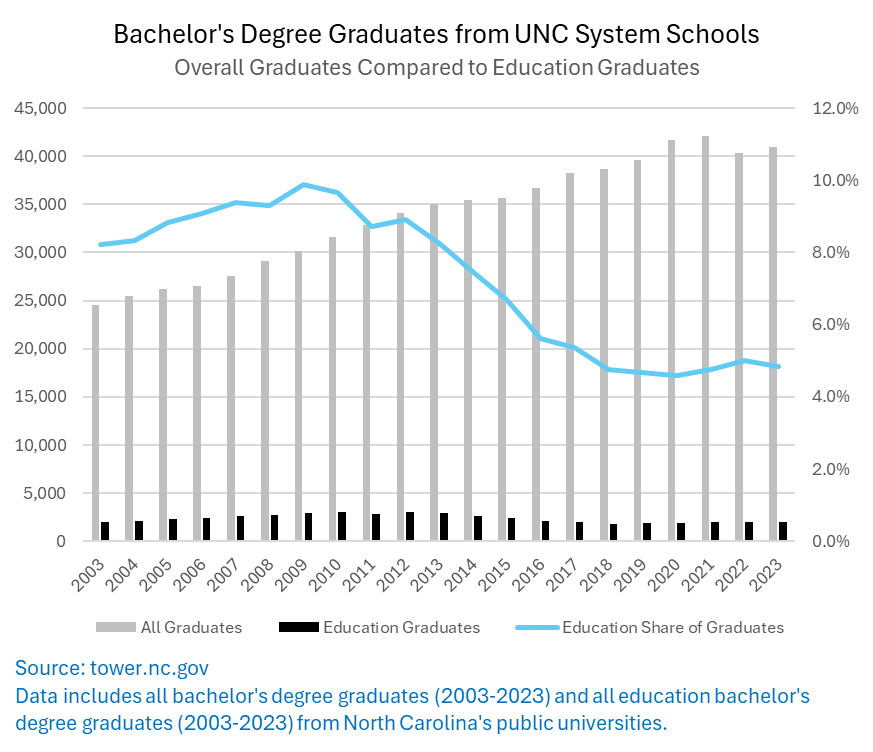
Education majors’ share of UNC System bachelor’s degree recipients during this period peaked in 2009 at 9.9%, then began a general decline to 4.6% in 2020. Considering that most students take 4-6 years to complete a bachelor’s degree, this suggests that student preferences started shifting away from education majors in the mid-2000s. Since 2020, the number of education graduates has increased to some extent, although the overall trends indicate changing student interests within the UNC System schools.
The data from the Common Follow-up System provide useful insights into these trends. While this article focuses on education majors at UNC System schools, similar analyses could be applied to other majors to provide additional insights that may support workforce and education planning in the state.