

According to the 2026 UNC System Workforce Alignment Report, UNC System schools account for 91 percent of Social Work degrees at the bachelor’s level and higher awarded by North Carolina institutions. The report identifies Social Work as a field with persistent workforce shortages in specific areas. To provide context for this finding, this article examines two decades of outcomes among Social Work bachelor’s degree recipients from UNC System institutions using data from the Common Follow-up System (CFS), highlighting graduate trends and the program’s contribution to meeting North Carolina’s workforce needs.
Growth Kept Pace with System Expansion
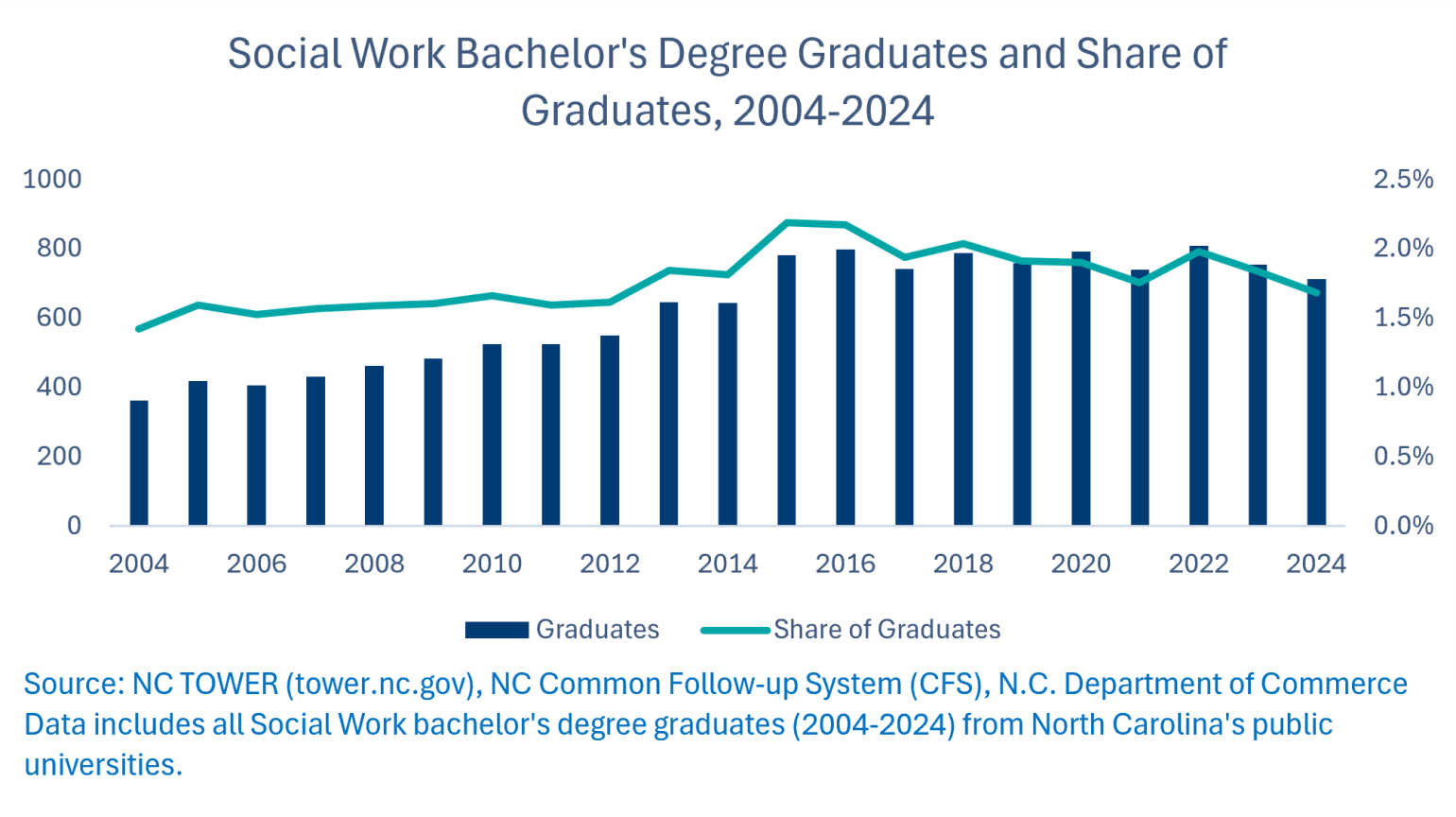
Between 2004 and 2024, the number of Social Work1 bachelor’s degree graduates from UNC System institutions rose from 361 to 711. The number of graduates peaked at 807 in 2022 then declined slightly in 2023 and 2024. Overall, growth in Social Work degrees mirrored broader system-wide expansion during this period, with Social Work accounting for 1.4 to 2.2 percent of all UNC System bachelor’s degree recipients.
Figure 1
Social Work Bachelor’s Degree Graduates from UNC System Schools
Graduate Enrollment Increased
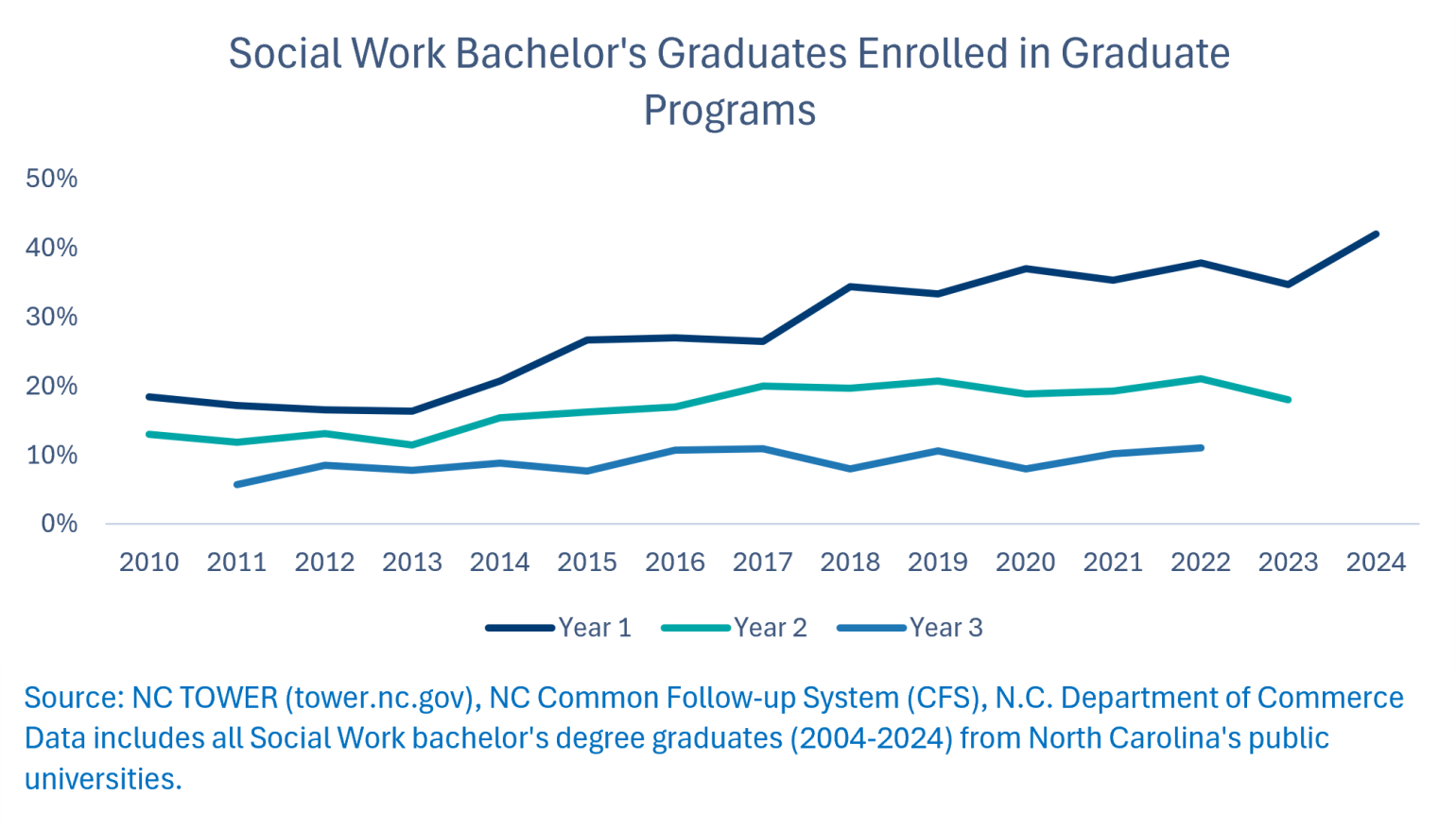
Graduate enrollment among Social Work graduates increased substantially during this period. Prior to the 2010 cohort, fewer than 11 percent of bachelor’s graduates enrolled in graduate education in any of the first three years following graduation. But by 2018, more than 30 percent did so, reflecting both evolving professional expectations and expanding educational pathways. This increase parallels a broader national trend. Between 2010 and 2020, the number of master’s degrees in Social Work conferred in the United States increased by 44.5 percent. This upward trajectory in graduate enrollment highlights the field’s growing credential landscape and the expanding opportunities for specialized training.
Figure 2
Graduate Enrollment of Social Work Bachelor’s Graduates
Health Care & Social Assistance Remained the Largest Employment Sector
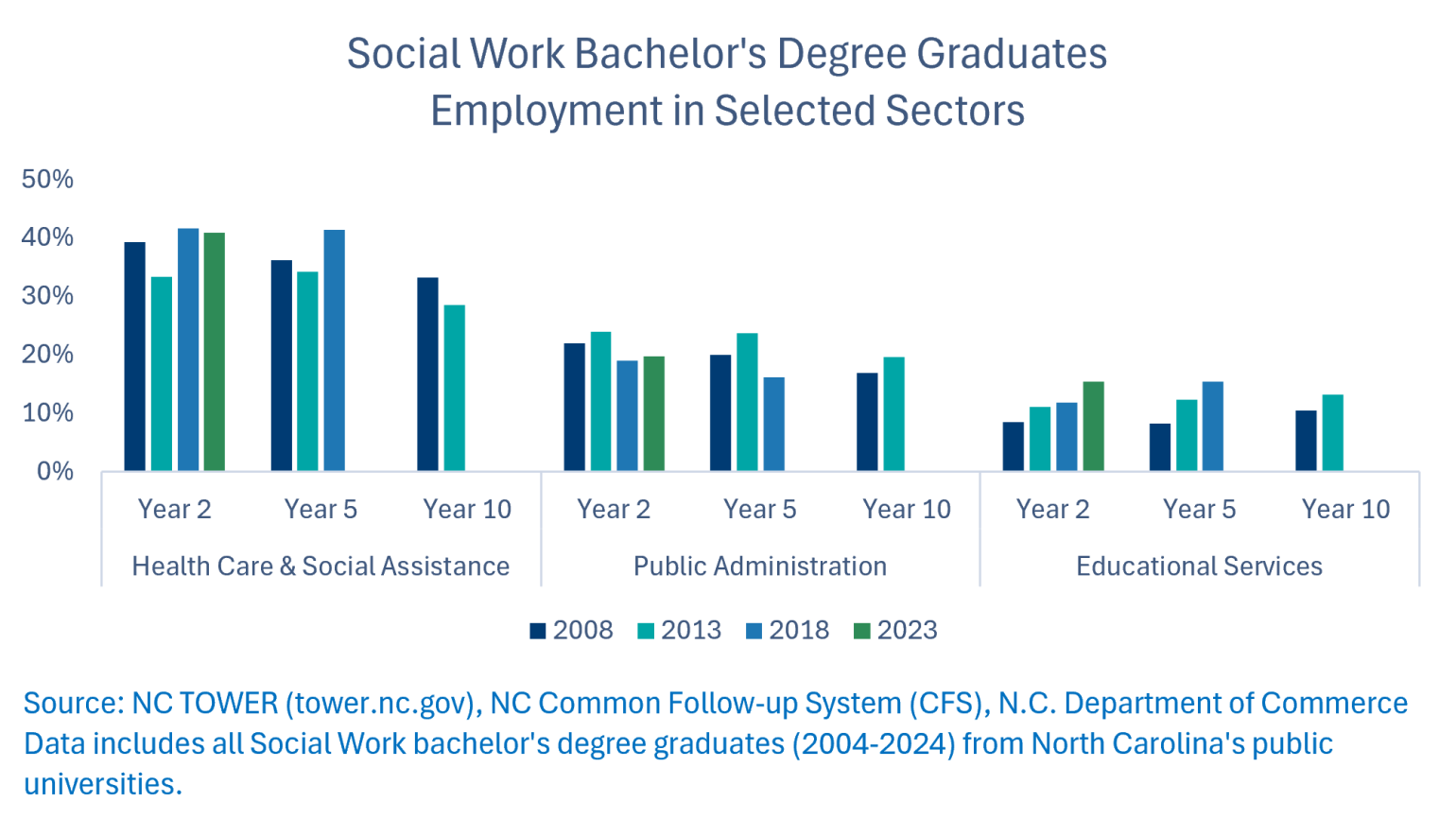
Employment data show that Social Work graduates remained closely tied to service-related sectors. Between 32 and 44 percent of Social Work graduates were employed in the Health Care & Social Assistance sector in the second year following graduation—a trend that remained stable in the fifth year. By year ten, employment in the sector declined slightly, suggesting some movement into other sectors or employment not captured in these data. The Public Administration and Educational Services sectors also employed substantial shares of graduates across all observed cohorts. The employment patterns of Social Work graduates are shown in Figure 3.
Figure 3
Social Work Graduates’ Employment by Sector
Wages Grew with Experience
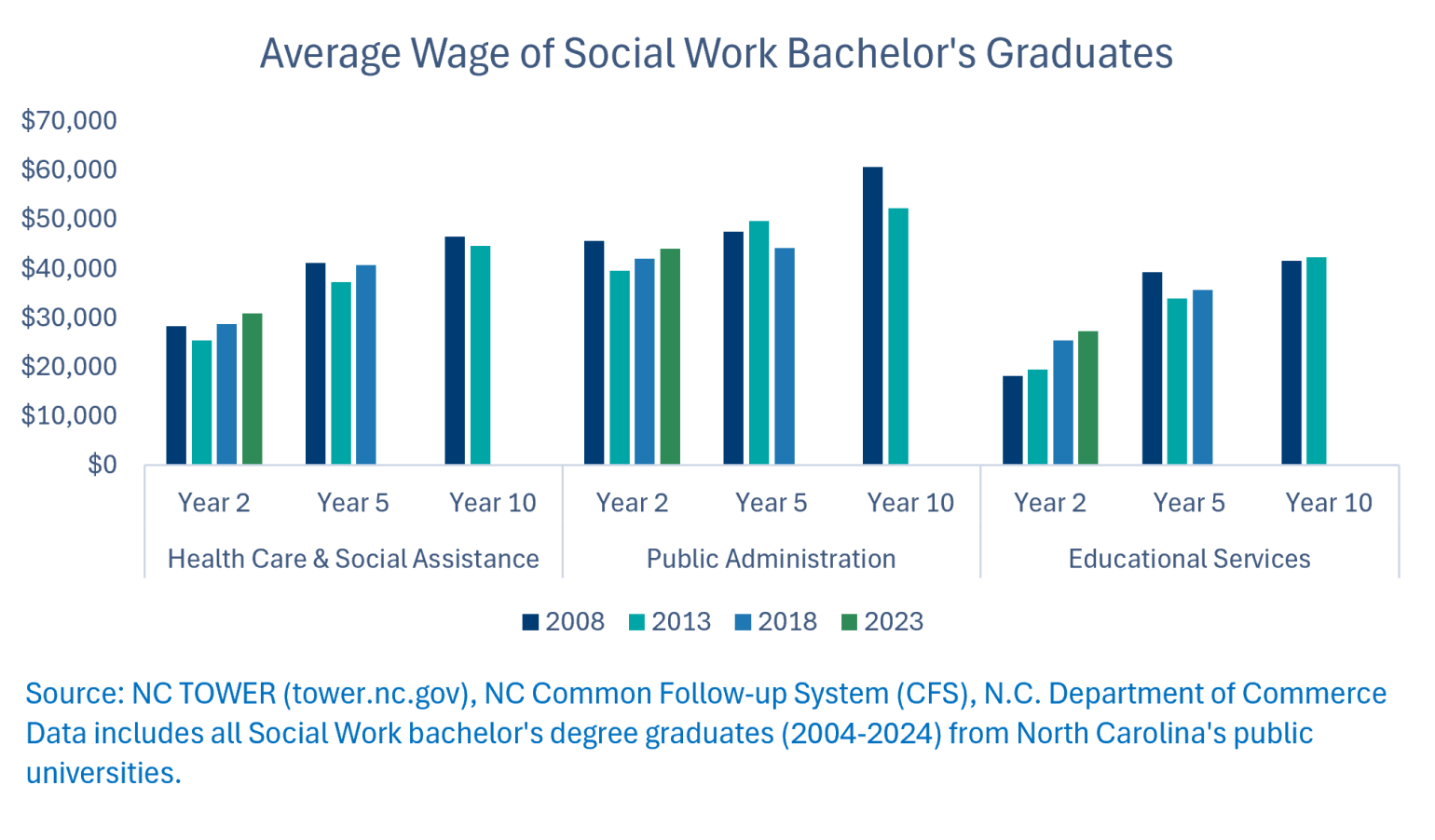
Trends in wage earnings point to opportunities for career progression. Across major employment sectors, average earnings2 rose steadily with time since graduation. The Public Administration sector consistently offered the highest wages at every experience level, although early-career wages in the Health Care & Social Assistance and Educational Services sectors grew for more recent cohorts. The Educational Services sector displayed the lowest early-career wages but saw substantial jumps by Year 5.
Figure 4
Average Wages of Social Work Graduates in the Health Care & Social Assistance, Public Administration, and Educational Services Sectors
While the number of Social Work graduates grew between 2004 and 2024, persistent workforce shortages remain in specific areas, particularly in certain specialties and underserved communities. At the same time, UNC System Social Work graduates continue to contribute to North Carolina’s workforce, with substantial employment among graduates in the Health Care & Social Assistance sector and a growing share pursuing advanced degrees.
To strengthen the pipeline of qualified professionals, the North Carolina Department of Health and Human Services and the North Carolina Social Work Coalition on Workforce Development launched the five-year Public Service Leadership Program in 2025, providing training and support to Social Work students. These trends underscore the importance of the UNC System’s Social Work programs in strengthening North Carolina’s workforce and expanding access to vital services that support community well-being.