

North Carolina faces a growing need for engineering talent as highlighted in the 2026 UNC System Workforce Alignment Report. To better understand trends in this field, this article draws on data from the Common Follow-up System (CFS) to examine two decades of data on Engineering bachelor’s degree recipients from UNC System institutions.
A Growing Pipeline of Engineering Graduates
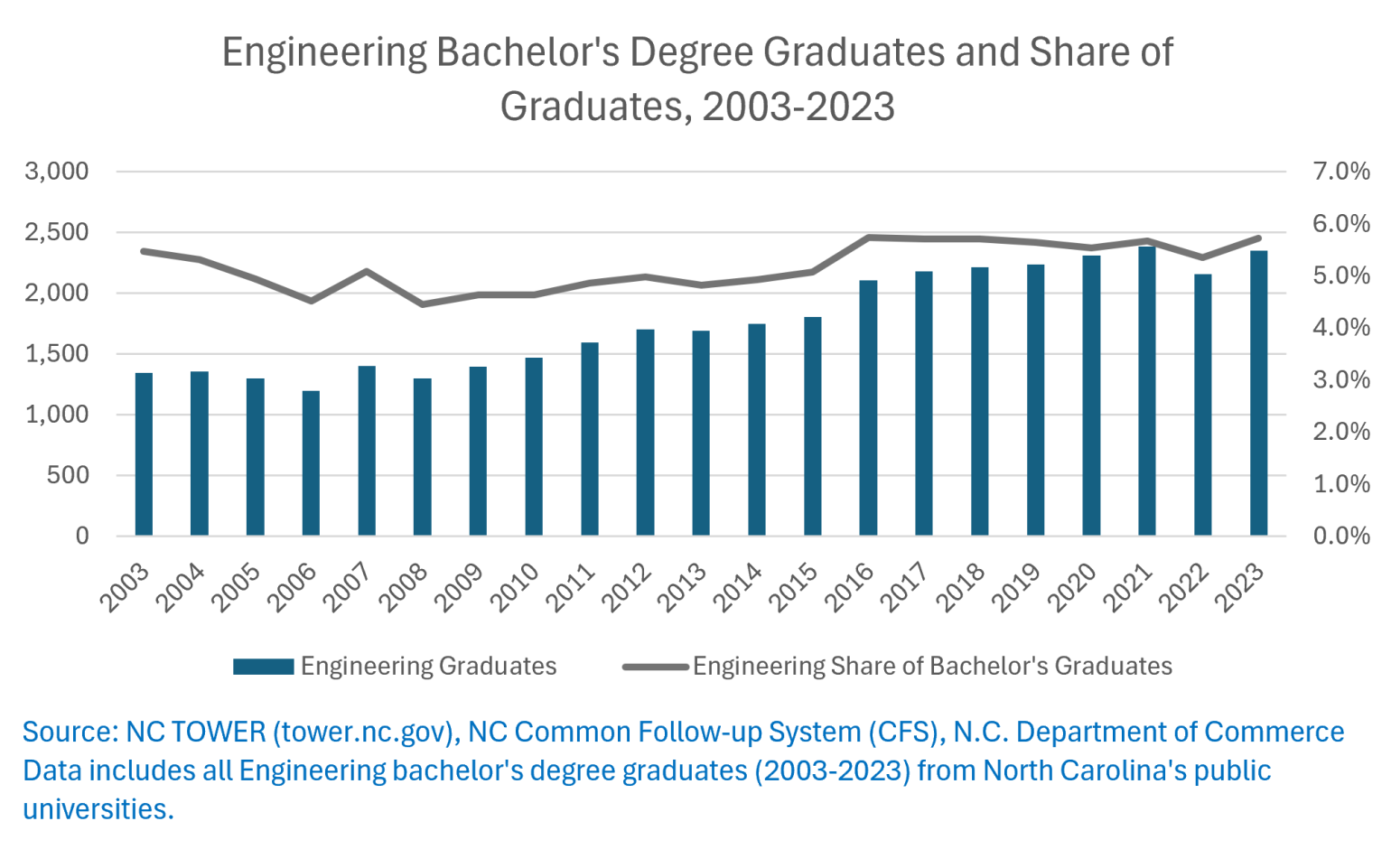
Between 2003 and 2023, the number of Engineering1 bachelor’s degree recipients increased by 75 percent, peaking at 2,386 in 2021 - a trend that suggests growing capacity in response to workforce demand. Since 2015, Engineering graduates have consistently represented more than five percent of all UNC System bachelor’s degree recipients.
Figure 1: Engineering Bachelor’s Degree Graduates from UNC System Schools, 2003-2023
Shifts Within Engineering Fields
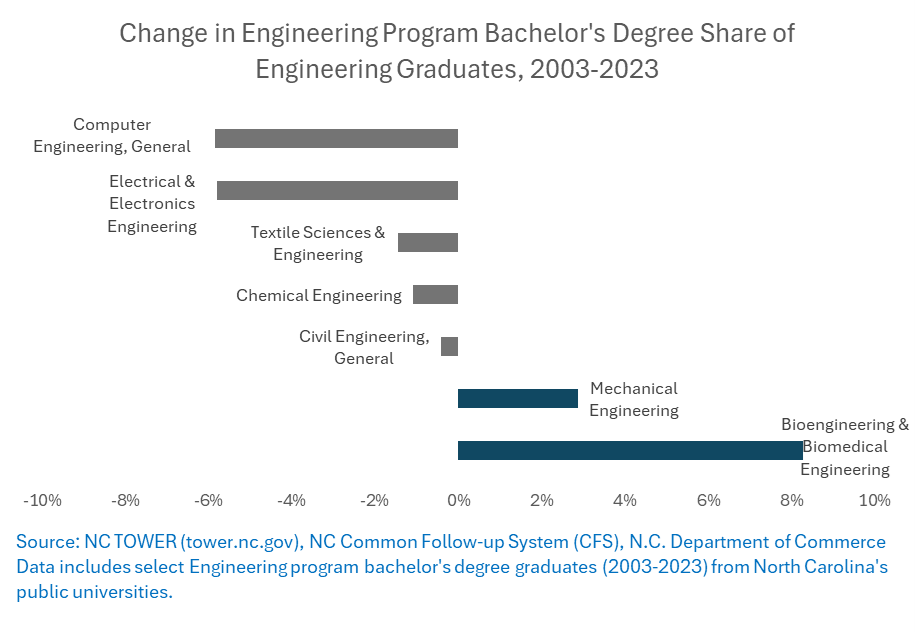
Looking more closely reveals that this growth has not been evenly distributed across engineering disciplines. The largest program, Mechanical Engineering, doubled its number of graduates over the twenty-year period. Electrical and Computer Engineering experienced fluctuations and graduated about the same number of students in 2023 as in 2003, resulting in a declining share of overall Engineering graduates. The most notable growth occurred in Bioengineering & Biomedical Engineering, which grew from 41 bachelor’s degree recipients in 2004 (the earliest year with reportable data for this program) to 194 in 2023. These shifts reflect changing student interests and evolving industry demand, particularly in fields connected to healthcare and advanced technologies - where demand for engineering talent is growing fastest.
Figure 2 presents the change in the largest engineering programs’ share of all Engineering graduates between 2003 and 2023.
Figure 2: Change in Engineering Programs Bachelor’s Degree Share of Engineering Graduates from UNC System Schools, 2003-2023
Where Do Engineering Graduates Work?
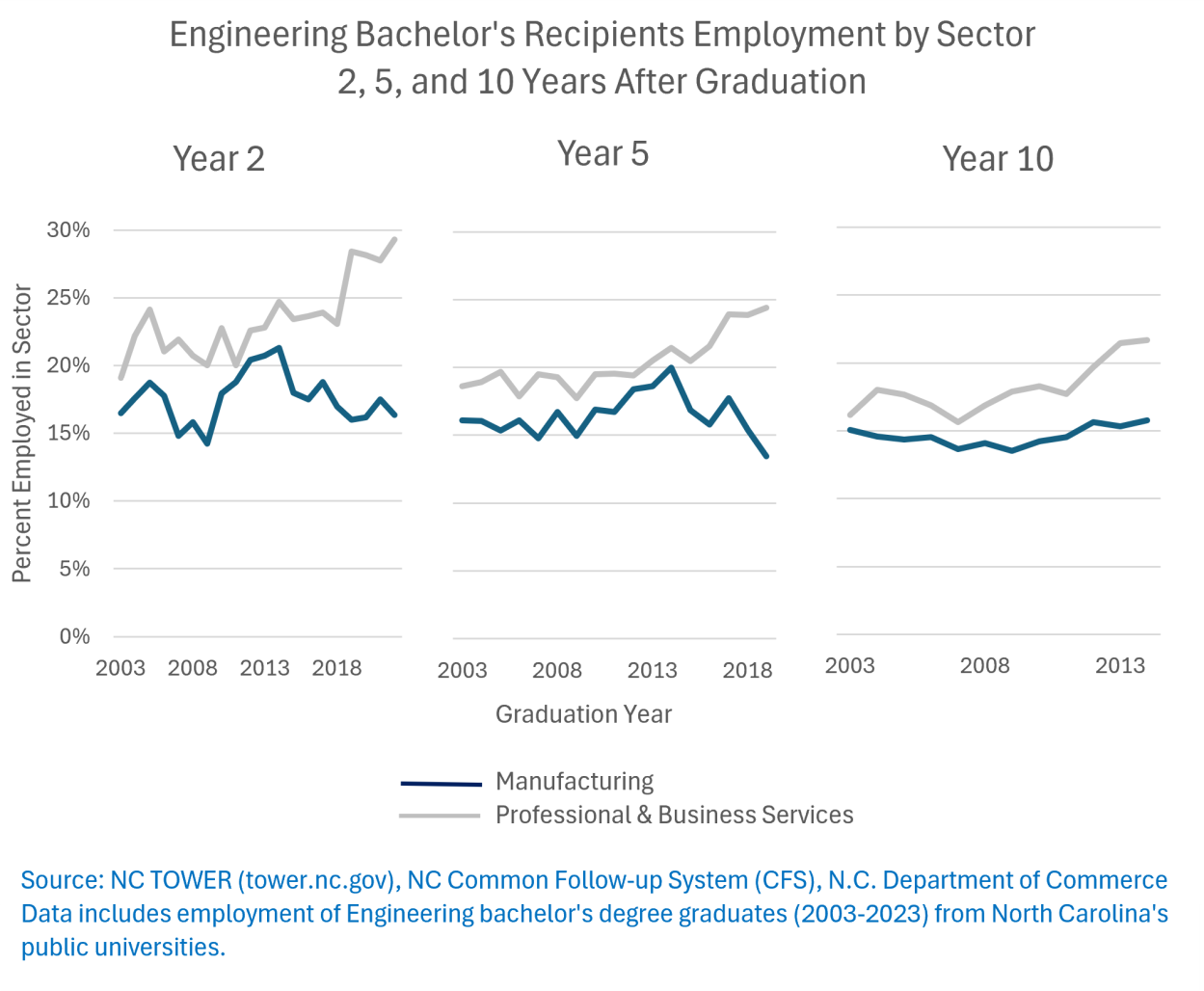
The industry sectors employing the largest numbers of Engineering graduates during this period were the Manufacturing sector and the Professional & Business Services sector. Between 2003 and 2022, the Professional & Business Services sector employed an increasing percentage of new graduates, with employment of graduates in their second year following graduation growing from 19 percent for the 2003 cohort to 29 percent for the 2022 cohort. This trend suggests a shift toward roles in consulting, technical services, and other knowledge-based industries, alongside traditional manufacturing careers.
Figure 3 presents the percentage of UNC System Engineering graduates employed in these sectors in years 2, 5, and 10 following graduation.
Figure 3: Engineering Graduates’ Employment by Sector
Earnings and Career Growth
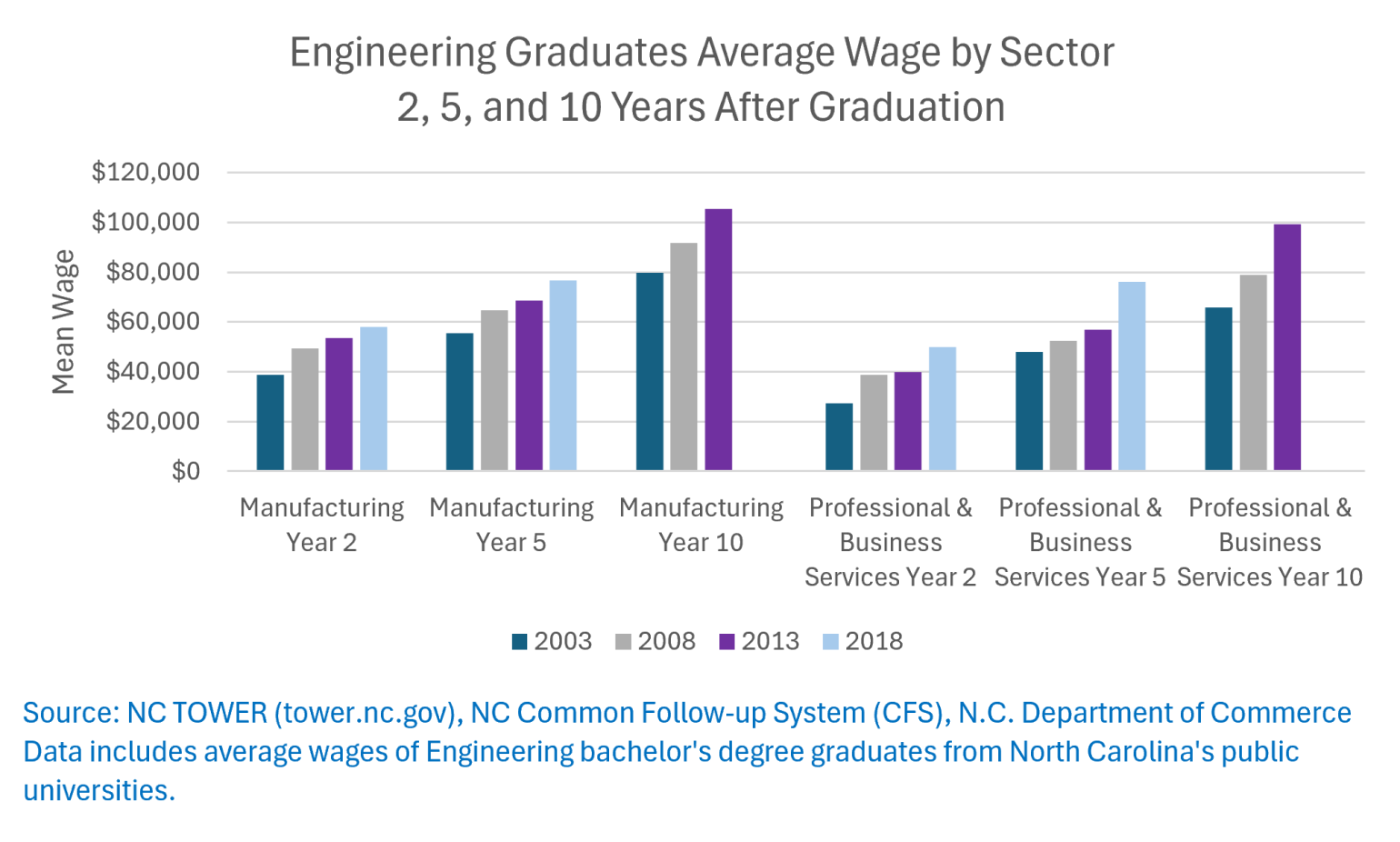
Wage earnings in these sectors increased steadily each year after graduation, suggesting there were strong opportunities for career advancement for Engineering students as they gained experience. The Manufacturing sector consistently offered higher average wages than Professional & Business Services. However, the gap has narrowed in recent years as wages for Professional & Business Services have been rising quickly. Average wages for selected graduation years are shown in Figure 4.
Figure 4: Average Wages of Engineering Graduates, Manufacturing and Professional & Business Services Sectors
What These Trends Mean for North Carolina
Together, these findings highlight a growing pipeline of engineering talent from the UNC System and strong wage trajectories across key employment sectors. Continued monitoring of program trends, employment, and wage outcomes will be important to align educational investment with North Carolina’s workforce needs.
- 1
Includes CIP codes with program code 14