
ONCSBP_Matching_Solicitation_FY2026_FINAL

ONE NC SMALL BUSINESS PROGRAM
Helping small businesses develop & commercialize innovative technologies
Small Business Innovative Research (SBIR)
Small Business Technology Transfer (STTR)
2025-2026 Matching Funds Program Solicitation
Funding Opportunity Number: NCBSTI-FY2526M
Closing Date: June 30, 2026
North Carolina Board of Science, Technology & Innovation
North Carolina Department of Commerce
301 North Wilmington Street
1326 Mail Service Center
Raleigh, NC 27699-1326
919-814-4668
https://www.commerce.nc.gov/about-us/divisions-programs/science-technology-innovation
[email protected]
Solicitation Release Date: December 15, 2025
Notice of Availability of Funds and FY 2025–2026 Program Solicitation for the One North Carolina Small Business Innovation Research (SBIR) and Small Business Technology Transfer (STTR) Phase I Matching Funds Program
| Announcement Type: | Renewal. Notice of Solicitation (Solicitation) for grant applications under the North Carolina SBIR/STTR Phase I Matching Funds Program (the “Match Program”). |
| Funding Opportunity Number: | NCBSTI–FY2526M |
| Statute and Guidelines: | This Solicitation is issued pursuant to the Match Program established under N.C.G.S. § 143B-437.81 and the Guidelines issued pursuant to N.C.G.S. §143B-437.82, which govern the administration of this program. The Guidelines are incorporated into this Solicitation by reference and may be found on the North Carolina Board of Science, Technology & Innovation’s website at: Guidelines. |
| Solicitation Period: | July 1, 2025 – June 30, 2026, inclusive, or until funds have been exhausted. |
| Key Dates: | Applicants must have received official notification of Phase I award by a Federal SBIR/STTR agency during the Solicitation Period** to be eligible. **Applications from companies who received Federal notification between the start date (July 1, 2025) and release date (December 15, 2025) of this Solicitation will be accepted if all eligibility requirements are met and funding is available. Deadline to submit to NCSBSTI-FY2526M: June 30, 2026, at 11:59 p.m., or until funds have been exhausted. |
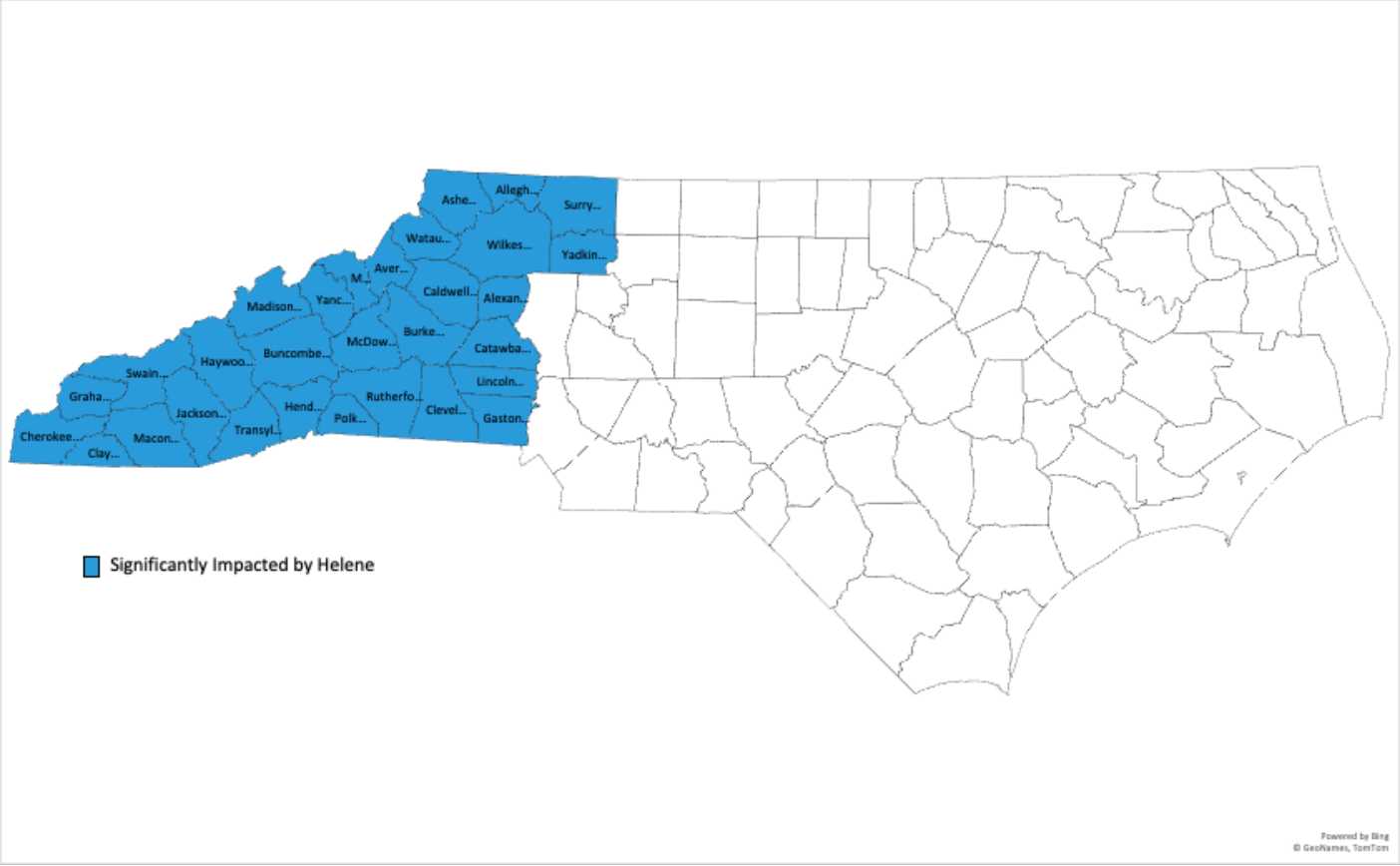
| Maximum Grant Amount & Eligible Applicants: | 50% of the Federal SBIR/STTR Program award, not to exceed $75,000**. **Eligible Applicants located in Helene-impacted counties are eligible for an additional $25,000.00** See Pages 4 and 5 for details. Due to funding limitations, the Board has imposed additional restrictions, as allowed by the governing statute and Guidelines. Eligible applicants are limited to those Phase I SBIR/STTR awardees that satisfy the eligibility requirements in Section E of the Guidelines and meet either of the following two conditions:
|
| Funding Available: | The maximum amount of funding available for all grants awarded under this solicitation is $1,876,560. |
Table of Contents
I. SUMMARY
The Match Program is designed to award matching funds to North Carolina (the “State”) companies who have been awarded a Small Business Innovation Research Program or Small Business Technology Transfer Program (the “Federal SBIR/STTR Program”) Phase I award. Companies compete for funding under this federal program by submitting proposals in response to solicitations issued by participating federal agencies.
The Federal SBIR/STTR Program provides for funding competitions in two phases that are relevant to the North Carolina program: Phase I - to conduct feasibility research (typically, Phase I awards range from $50,000-$250,000); and Phase II - to expand and develop Phase I results and develop commercially viable innovations (typically, Phase II awards range from $500,000-$1.5M or more). More information about the Federal SBIR/STTR Program may be found at: http://www.sbir.gov.
The North Carolina Board of Science, Technology & Innovation (the “Board”), administered by the North Carolina Department of Commerce Office of Science, Technology & Innovation (OSTI), through its Executive Director, administers the Match Program in the manner first set forth in statute and then by the Guidelines established by the Board for the One North Carolina Small Business Matching Funds Program. Terms not otherwise defined herein have the meaning set forth in the Guidelines.
II. ELIGIBILITY & LIMITATIONS ON AWARDS
An Applicant must satisfy all eligibility requirements and is subject to the limitations set forth in N.C.G.S. § 143B-437.81, the Guidelines, and this Solicitation.
Applicants are strongly encouraged to read and understand the governing documents and this Solicitation to determine if they are eligible to apply.
An Applicant may receive no more than one (1) Match Award during the period covered by this Solicitation.1
In addition, due to funding limitations, eligible applicants under this Solicitation are limited to only those Phase I SBIR/STTR awardees that satisfy the eligibility requirements in Section E of the Guidelines and meet either of the two following conditions:
- Are located in a Tier 1 or 2 county (current designations), as defined by the N.C. Department of Commerce; or
- Are located in a Tier 3 county (current designations) and have not previously received more than three (3) awards under the Match Program. (This does not apply to applicants located in the Helene-impacted area. See pages 4 and 5 for details.)
Special provision on STTR Awards: The Board will consider for funding under the Match Program only the fraction of the total of a Federal STTR grant amount made to the Small Business Applicant in a collaboration, up to the limits established in this Solicitation. The research institution component of the collaboration is ineligible for funds under the Match Program, and the portion of the Federal STTR award made to the research institution component will not be considered in establishing the amount of any Match Program award to the small business.
III. AWARD STRUCTURE; MILESTONES
- Applications will be considered, and funds awarded, as established in the Guidelines, through the end of this Solicitation Period, or until the funds available under this Solicitation have been exhausted.
- So long as funds remain available, for each approved Application, Match Awards will be made in the amount of:
50% of the Federal SBIR/STTR Program award amount, not to exceed $75,000.00.**
** Applicants located in counties identified to have been most heavily impacted by Hurricane Helene (see map, next page) are eligible for an additional $25,000.00.
1 Subject to funding limitations, a grant to a business partnered with a public institution of higher education in North Carolina does not count toward the maximum grant limitation.
- Subject to the satisfaction of all other requirements, Match Program Awards will be disbursed in two Stages:
- Stage 1 - 75% of the total Match Award will be disbursed following proof of Phase I award, as described in Section IV. of this Solicitation.
- Stage 2 - 25% of the total Match Award will be disbursed following invitation to submit a new application for a Stage 2 disbursement after submission and acceptance of the Phase I report by the Federal SBIR/STTR Program agency described in the Application; acknowledgement of receipt by that agency of the Phase II proposal corresponding to the Phase I effort, within the timeframe specified in the then-current Guidelines; and proof of final Phase I payment.
IV. APPLICATION REQUIREMENTS; ELECTRONIC SUBMISSION
Applicants must use the application forms and methods provided and must comply with all requirements of this Solicitation, the enabling statute, and the Guidelines to be eligible for funding. All Applications and required supporting documents must be submitted electronically using CyberGrants, the Board’s grant management software, which is accessible through the One N.C. Small Business Program website at: https://www.commerce.nc.gov/grants-incentives/technology-funds/one-north-carolina-small-business-program.
Stage 1 or Stage 2 Applications that do not include ALL required responses, documents, and information will be deemed incomplete and will not be considered for funding. No applications or supplemental materials submitted in response to this announcement will be accepted after the Closing Date or after funds available for this Solicitation have been exhausted.
Note: Stage 2 disbursements will not be automatically made to Match Award Recipients. An invitation to apply for Stage 2 disbursement will be issued to Match Program award recipients only after all Stage 1 requirements of the Match Award grant agreement have been met. The recipient will notify OSTI when such requirements have been met through completion and submission of required Interim Status Reports via CyberGrants. Only Stage 1 Recipients are eligible for Stage 2 disbursements. Unsolicited Stage 2 disbursement applications are not permitted under this Solicitation. Upon receipt of an invitation from OSTI, a new Application must then be submitted and approved to be eligible for State 2 disbursement.
In addition to completing all required sections of the online application, Applicants who are eligible to submit a full Application (see section VI below) will be required to submit the following documents and information during the online applications process:
- Completed and notarized* Application Certification. This document attests that the Applicant meets all eligibility requirements and that all statements and materials provided are true, accurate, and complete. This document is generated in CyberGrants.
- Completed and notarized* Location Certification. This document, signed by an authorized official of the Applicant, attests that, at a minimum, fifty-one percent (51%) of the activity conducted under the Phase I effort will be performed in North Carolina. This is applicable for both Stage 1 (Phase I R&D) and Stage 2 (Phase II R&D) funding. This document is generated in CyberGrants.
- A copy of the Applicant’s Articles of Incorporation and by-laws, trust indenture, or partnership agreement.
- A Certificate of Existence or Certificate of Authorization for the Applicant, also known as a Certificate of Good Standing, issued by the North Carolina Secretary of State.
(https://www.sosnc.gov/divisions/business_registration), pursuant to N.C.G.S. §§ 55-1-28 and 59-35.1, no more than ninety (90) days before the date of the Applicant’s Match Program Application. NOTE: You must create an account with the Secretary of State’s Office to obtain a copy of your Certificate of Existence or Authorization. - Relevant page(s) of the Federal Phase I Program Solicitation associated with this Match Program Application, showing the solicitation topic description, closing date, and top reference number. Submission of a link to the solicitation does not satisfy this requirement.
- A copy of the Applicant’s entire SBIR/STTR Phase I Proposal (SF424, if applicable). Direct-to-Phase II and Phase II awards are not eligible.
- STTR Applicants Only: A budget justifying the grant award amount requested (for the STTR Match Program, only the portion of the Federal STTR award made to the Small Business Applicant is eligible under this Program).
- Names and addresses of all consultants retained to advise and assist the Applicant in securing the SBIR/STTR Phase I award.
- One of the Following:
For a Stage 1 disbursement (the 75% increment), evidence that the Applicant has received an SBIR/STTR Phase I award must be provided. This evidence must include:
- A copy of the executed SBIR/STTR Phase I contract; or
- An Official Notification of Award from the Federal funding agency.
Official Notifications of Award from a Federal Funding Agency: Official Notifications of Award may only be issued by the finance, accounting, contracting, or other unit of the agency authorized to commit and obligate the agency under the terms of the Federal SBIR/STTR Solicitation for which a Match Program Award is sought. No other form of notification is considered official for the purposes of the Match Program. See definition of “Federal Notice” in the Guidelines. All Applications submitted without an Official Notification of Award will be rejected without consideration.
-or-
For a Stage 2 disbursement (the 25% increment), a Recipient must provide evidence that the SBIR/STTR Phase I Final Report was accepted by the federal SBIR/STTR agency, that terms of the SBIR/STTR Phase I contract between the company and the participating federal agency were satisfied by the company, and that the Federal SBIR/STTR Phase II proposal was submitted and received by the participating agency. Such evidence must include:
- A copy of the federal SBIR/STTR Phase I/FastTrack award or executed contract (Direct-to-Phase II and Phase II awards are not eligible);
- A copy of the federal SBIR/STTR Phase I Final Report;
- Verification of the final payment to the Applicant under the Federal SBIR/STTR Phase I contract (if final payment is pending, a certified letter from the relevant federal agency documenting the company’s successful completion of the Federal SBIR/STTR Phase I contract, including a statement of eligibility for final payment, may be substituted);
- Proof that the Federal SBIR/STTR Phase II proposal has been submitted to and received by the participating agency within the required eligibility period (examples include but are not limited to a delivery notice from carrier service [e.g., Federal Express]; tracking report showing final delivery date; or written or electronic notification from the agency confirming the date of proposal receipt); and
- A copy of the entire Federal Phase II proposal.
*PLEASE NOTE: In-state, virtual notary is acceptable if it is completed in accordance with the Remote Electronic Notarization Act (N.C. Gen. Stat. §§ 10B-134 – 134.26). Please reference the statute for all requirements.
Proprietary Material: Proprietary or classified material included in a proposal for funding but not directly related to Applicant’s eligibility under this Solicitation may be excluded from the Application. If excluded, the Applicant
must submit a notarized statement, signed by an authorized official of the Applicant, attesting that the excluded material is proprietary or classified and that economic harm or violation of rules pertaining to classified materials will result if such materials are submitted. This statement may be combined with that described in Items 6 and 9.e. above. Applications containing proposals that attempt to restrict the dissemination of large amounts of information may be deemed unacceptable and may be rejected.
V. APPLICATION PREPARATION AND SUBMISSION; ELECTRONIC FILING WAIVER
All Applications for Match Program Award disbursements under this Solicitation must be submitted electronically through CyberGrants. Applications must be submitted, and all required supporting materials received, by 11:59 p.m. EST on June 30, 2026, or prior to close of the Solicitation Period, should funds be exhausted before June 30, 2026. . For companies whose notification occurred between the start date (July 1, 2025) and release date (December 15, 2025) of this Solicitation, are eligible to apply if all other eligibility requirements have been met.
No Applications or supplemental materials received in response to this Solicitation, except for supplemental material requested from the Applicant, shall be accepted after 11:59 p.m. EST, June 30, 2026, or the time when total funds allocated to this Solicitation have been exhausted. Neither the Board nor the OSTI Staff is responsible for Applications or materials lost in transmission. Applicants who are unable to obtain internet access or for whom the electronic filing requirement causes undue hardship may request a waiver from the electronic filing requirement in writing to [email protected] or:
North Carolina Board of Science, Technology & Innovation
301 N. Wilmington Street
1326 Mail Service Center
Raleigh, NC 27699-1326
ATTN: NC SBIR/STTR Matching Funds Program, FY25-26 Solicitation, Electronic Submission Waiver
This waiver request must clearly indicate why the electronic filing requirement causes undue hardship and must include a list of all factors that make compliance difficult, expensive, or cumbersome for the Applicant. All waiver requests will be considered on a case-by-case basis.
VI. APPLICATION SUBMISSION AND APPROVAL
- Applications will be reviewed to ascertain compliance with the requirements of this Solicitation through the end of the Solicitation Period. Applications or supplemental materials received after 11:59 p.m. EST on the last business day of this Solicitation Period or after funds have been exhausted will not be accepted.
- To qualify for funding, Applications must be complete and in full compliance with all requirements. Incomplete or non-compliant Applications will be rejected without further review. In their discretion, the Board and/or the OSTI Staff may request supplemental materials from the Applicant, and such materials must be received within fifteen (15) days of the request date or the Application may be rejected without further review.
- Applicants who have previously received ONCSBP awards must be compliant with all previous awards, including post-award reporting, to be considered eligible for an award during this Solicitation Period.
- Applicants on the State’s Suspension of Funding List (SOFL) are not eligible to receive funding.
- Applications that meet all requirements set forth herein will be approved on a rolling, first-come, first-served basis, through the earlier of (i) the end of the Solicitation Period, or (ii) the date on which funds available for the Match Program have been exhausted.
VII. GRANT AGREEMENT & PAYMENT OF AWARDS
The North Carolina Office of State Budget and Management (OSBM) has established specific performance and reporting requirements relative to the way grants of State funds are to be made to and accounted for by Recipients. Prior to receiving an Award disbursement under this Program, Recipients will be required to enter into a grant agreement with the State of North Carolina, which will include the OSBM requirements, as well as those specific to the Match Program, as described in the Guidelines. Further, prior to disbursement, Recipients will be required to supply additional company information, including:
- A copy of the Recipient’s policy addressing conflicts of interest (see Exhibit D);
- A list of the Recipient’s Board of Directors/Trustees;
- A sworn statement certifying that there are no overdue state tax debts owed by the Recipient;
- A North Carolina Substitute W9 form; and
- A Supplier Electronic Payment Request Form with bank account verification
After execution and return of the grant agreement and submission of the required additional company information, the State of North Carolina will issue Match Program grant payments to Recipients electronically (if this is the first State payment received by the Applicant, payment may be a mailed paper check). Payments will be deposited into the checking or savings account of the Recipient’s choice.
VIII. REPORTING REQUIREMENTS
Recipients are responsible for managing the day-to-day operations of their Match Program Award-supported activities using their established controls and policies, provided those controls and policies are consistent with State and Federal requirements. To fulfill its role regarding the stewardship of State funds, however, the Board monitors its grants to identify potential problems and areas where assistance might be necessary. This active monitoring is accomplished through review of reports and correspondence from Recipients and other information available to the Board and the OSTI Staff. In addition, these reports allow the impacts of the Match Program to be measured and reported. All Recipients must submit the following electronically via CyberGrants:
- Interim Status Reports in the form and manner described in Appendix A, every six (6) months after receipt of an Award, or more frequently if required by the Board in its discretion, until the company receives the Federal Phase II award or notification that the award will not be granted;
- A Final Report in the form and manner described in Appendix B within thirty (30) days of notification of a Federal Phase II contract award or denial; and
- All reports described in Appendix C within three (3) months after the end of the Recipient’s fiscal year in which a Match Program Award was received. All Recipients that receive, use, or expend a Match Program Award within the Recipient’s fiscal year must comply with all applicable State Grant Compliance Reporting Requirements, as described in Appendix C.
Failure to meet reporting requirements is cause for placement on the State Suspension of Funding List.
IX. GENERAL INFORMATION
Inquiries
Inquiries about the Match Program should be addressed to:
North Carolina Board of Science, Technology & Innovation
301 N. Wilmington Street
1326 Mail Service Center
Raleigh, NC 27699-1326
[email protected]
ATTN: Information Request - NC SBIR/STTR Matching Funds Program FY2025-2026
Current solicitation information for all Board funding programs is available on the Board website at:
https://www.commerce.nc.gov/about-us/divisions-programs/science-technology-innovation. Federal SBIR/STTR solicitations and program information is available online at: http://www.sbir.gov.
X. APPENDICES
Appendix A – Interim Status Report Requirements
ONE NORTH CAROLINA SBIR/STTR PHASE I MATCHING FUNDS PROGRAM INTERIM STATUS REPORT REQUIREMENTS
All required Interim Status Reports must be submitted via CyberGrants using the tools and forms provided therein for this purpose. As part of an Interim Status Report, Match Award Recipients will be required to provide a thorough and complete report of their progress to date, including summaries of their company’s interim status at the time of the report in terms of:
- Research progress;
- The adequacy of NCBSTI SBIR/STTR Matching funds in meeting the company’s needs; and
- Whether the company is still prepared to accept a Federal Phase II contract if awarded.
If the company is unable to continue operations, even with the One North Carolina SBIR/STTR Phase I Matching Funds Program award, it must provide a detailed explanation about why operations are unable to continue.
This report is due every six (6) months after receipt of a Match Award until (a) the receipt of a Federal Phase II award for the program for which a Match Program Award was given or (b) notification the federal award will not be granted. The Board in its discretion, however, may require these reports more frequently.
Appendix B – Final Report Requirements
ONE NORTH CAROLINA SBIR/STTR PHASE I MATCHING FUNDS PROGRAM FINAL REPORT REQUIREMENTS
All Final Reports must be submitted via CyberGrants using the tools and forms provided therein for this purpose. Final Reports must be filed within thirty (30) days of notification of a Federal Phase II contract award or denial. As part of the Final Report, Match Award Recipients will be required to provide a thorough and complete report of their program performance, including responses to the following prompts:
- If your company was awarded a Federal Phase II contract, please state the date of award and the contract amount.
- If a Phase II contract was awarded but the company was unable or unwilling to accept the contract, please explain;
- Please state whether the company plans to continue the proposed research with its own resources if a Federal Phase II contract was not awarded (if this is the case, will/did the One North Carolina SBIR/STTR Phase I Matching Funds Program award contribute to the company’s ability to continue the research?);
- Please discuss any material effects the One North Carolina SBIR/STTR Phase I Matching Funds Program award had on your company;
- Please provide any general comments you may have about the One North Carolina SBIR/STTR Phase I Matching Funds Program; and
- Please provide a summary of progress toward the achievement of the originally stated aims, a list of the results (positive or negative) considered significant, and a list of publications related to the Match Award-funded project.
Appendix C – State Grant Compliance Reporting Requirements (09 NCAC 3M .205) (N.C. Gen. Stat. § 143C-6-23)
A company, corporation, partnership, association, unit of local government, public authority, or any other person, organization, group, or governmental entity that is not a State agency, department, or institution that receives, uses, or expends at least $25,000 but less than $500,000 in State funds within its fiscal year must file annually with the State agency that disbursed the funds a:
- Certification completed by the grantee Board and management stating that the State financial assistance funds received or held was used for the purpose intended;
- Schedule of Grantee Receipts and Expenditures accounting for all State financial assistance received, held, used, or expended; and a
- Description of activities and accomplishments undertaken with those State funds.
For the purposes of the required reports, the grantee’s fiscal year is used to determine the amounts received, used, or expended. The due date for filing the required report is three (3) months after the grantee organization’s fiscal year-end, and the accounting must be certified and sworn to by the Treasurer and one other authorized officer of the grantee. This certification is a representation by management and is not intended to be an independent assessment.
The Office of the State Auditor, in coordination with the Office of State Budget and Management and other key state agencies, has developed standard reporting formats for meeting the reporting requirements outlined in N.C.G.S. Chapter 143C, Part 3 and Title 9, Subchapter 3M of the North Carolina Administrative Code. There are no exceptions to using the financial reporting formats specified by the State Auditor.
The standard reporting formats for grantees receiving at least $25,000 but less than $500,000 include:
- Certification and sworn statement by the Treasurer and a second authorized officer on the entity’s letterhead;
- State Grants Compliance report, which includes supplemental compliance information;
- Schedule of Grantee Receipts and Expenditures (cash basis).
The Office of State Budget and Management has responsibility for the State Grant Compliance Reporting requirements.
Approximately two (2) months before a grantee organization’s State Grant Compliance Report is due, the grantee organization will be notified via e-mail and provided with additional information regarding procedures for submitting the State Grant Compliance Report. If a grantee organization wishes to submit the report sooner, it should contact the Board at [email protected] or 919-814-4668.
XI. EXHIBITS
Please note: The following reproductions of the N.C. General Statutes are for general information purposes only and are reproduced herein as a courtesy without any guarantee as to accuracy. The N.C. General Statutes may be amended on a yearly basis. For the most up-to-date versions, consult the N.C. General Assembly’s website at http://www.ncleg.net/gascripts/statutes/Statutes.asp.
Exhibit A – N.C. General Statutes Provisions Addressing Public Records
Exhibit A to the One NC Small Business Innovation Research/Small Business Technology Transfer (SBIR/STTR) Phase I Matching Funds Program Agreement
Provisions of N.C. General Statutes Addressing Public Records, Confidential Information, and Economic Development Projects
§ 132-1. "Public records" defined
(a) "Public record" or "public records" shall mean all documents, papers, letters, maps, books, photographs, films, sound recordings, magnetic or other tapes, electronic data-processing records, artifacts, or other documentary material, regardless of physical form or characteristics, made or received pursuant to law or ordinance in connection with the transaction of public business by any agency of North Carolina government or its subdivisions. Agency of North Carolina government or its subdivisions shall mean and include every public office, public officer or official (State or local, elected or appointed), institution, board, commission, bureau, council, department, authority or other unit of government of the State or of any county, unit, special district or other political subdivision of government.
(b) The public records and public information compiled by the agencies of North Carolina government, or its subdivisions are the property of the people. Therefore, it is the policy of this State that the people may obtain copies of their public records and public information free or at minimal cost unless otherwise specifically provided by law. As used herein, "minimal cost" shall mean the actual cost of reproducing the public record or public information.
…
§ 132-1.1. State tax information
…
(b) State and Local Tax Information. – Tax information may not be disclosed except as provided in G.S. 105-259. As used in this subsection, "tax information" has the same meaning as in G.S. 105-259. Local tax records that contain information about a taxpayer's income or receipts may not be disclosed except as provided in G.S. 153A-148.1 and G.S. 160A-208.1.
….
§ 132-1.2. Confidential information.
Nothing in this Chapter shall be construed to require or authorize a public agency or its subdivision to disclose any information that:
(1) Meets all of the following conditions:
a. Constitutes a "trade secret" as defined in G.S. 66-152(3).
b. Is the property of a private "person" as defined in G.S. 66-152(2).
c. Is disclosed or furnished to the public agency in connection with the owner's performance of a public contract or in connection with a bid, application, proposal, industrial development project, or in compliance with laws, regulations, rules, or ordinances of the United States, the State, or political subdivisions of the State.
d. Is designated or indicated as "confidential" or as a "trade secret" at the time of its initial disclosure to the public agency.
…
§ 66-152. Definitions
As used in this Article, unless the context requires otherwise:
…
(2) "Person" means an individual, corporation, government, governmental subdivision or agency, business trust, estate, trust, partnership, association, joint venture, or any other legal or commercial entity.
(3) "Trade secret" means business or technical information, including but not limited to a formula, pattern, program, device, compilation of information, method, technique, or process that:
a. Derives independent actual or potential commercial value from not being generally known or readily ascertainable through independent development or reverse engineering by persons who can obtain economic value from its disclosure or use; and
b. Is the subject of efforts that are reasonable under the circumstances to maintain its secrecy.
The existence of a trade secret shall not be negated merely because the information comprising the trade secret has also been developed, used, or owned independently by more than one person, or licensed to other persons.
§ 132-1.11. Economic development incentives
(a) Assumptions and Methodologies. - Subject to the provisions of this Chapter regarding confidential information and the withholding of public records relating to the proposed expansion or location of specific business or industrial projects when the release of those records would frustrate the purpose for which they were created, whenever a public agency or its subdivision performs a cost-benefit analysis or similar assessment with respect to economic development incentives offered to a specific business or industrial project, the agency or its subdivision must describe in detail the assumptions and methodologies used in completing the analysis or assessment. This description is a public record and is subject to all provisions of this Chapter and other law regarding public records.
(b) Disclosure of Public Records Requirements. - Whenever an agency or its subdivision first proposes, negotiates, or accepts an application for economic development incentives with respect to a specific industrial or business project, the agency or subdivision must disclose that any information obtained by the agency or subdivision is subject to laws regarding disclosure of public records. In addition, the agency or subdivision must fully and accurately describe the instances in which confidential information may be withheld from disclosure, the types of information that qualify as confidential information, and the methods for ensuring that confidential information is not disclosed.
§ 132-6. Inspection, examination and copies of public records.
(a) Every custodian of public records shall permit any record in the custodian's custody to be inspected and examined at reasonable times and under reasonable supervision by any person, and shall, as promptly as possible, furnish copies thereof upon payment of any fees as may be prescribed by law. As used herein, "custodian" does not mean an agency that holds the public records of other agencies solely for purposes of storage or safekeeping or solely to provide data processing.
(a1) A public agency or custodian may satisfy the requirements in subsection (a) of this section by making public records available online in a format that allows a person to view the public record and print or save the public record to obtain a copy. If the public agency or custodian maintains public records online in a format that allows a person to view and print or save the public records to obtain a copy, the public agency or custodian is not required to provide copies to these public records in any other way.
(b) No person requesting to inspect and examine public records, or to obtain copies thereof, shall be required to disclose the purpose or motive for the request.
(c) No request to inspect, examine, or obtain copies of public records shall be denied on the grounds that confidential information is commingled with the requested nonconfidential information. If it is necessary to separate confidential from nonconfidential information in order to permit the inspection, examination, or copying of the public records, the public agency shall bear the cost of such separation.
(d) Notwithstanding the provisions of subsections (a) and (b) of this section, public records relating to the proposed expansion or location of specific business or industrial projects may be withheld so long as their inspection, examination or copying would frustrate the purpose for which such public records were created; provided, however, that nothing herein shall be construed to permit the withholding of public records relating to general economic development policies or activities. Once the State, a local government, or the specific business has announced a commitment by the business to expand or locate a specific project in this
State or the business has made a final decision not to do so, of which the State or local government agency involved with the project knows or should know, the provisions of this subsection allowing public records to be withheld by the agency no longer apply. Once the provisions of this subsection no longer apply, the agency shall disclose as soon as practicable, and within 25 business days, public records requested for the announced project that are not otherwise made confidential by law. An announcement that a business or industrial project has committed to expand or locate in the State shall not require disclosure of local government records relating to the project if the business has not selected a specific location within the State for the project. Once a specific location for the project has been determined, local government records must be disclosed, upon request, in accordance with the provisions of this section. For purposes of this section, "local government records" include records maintained by the State that relate to a local government's efforts to attract the project.
Records relating to the proposed expansion or location of specific business or industrial projects that are in the custody of the Department of Commerce or an entity with which the Department contracts pursuant to G.S. 143B-431.01 shall be treated as follows:
| (1) | Unless controlled by another subdivision of this subsection, the records may be withheld if their inspection, examination, or copying would frustrate the purpose for which the records were created. |
| (2) | If no discretionary incentives pursuant to Chapter 143B of the General Statutes are requested for a project and if the specific business decides to expand or locate the project in the State, then the records relating to the project shall not be disclosed. |
| (3) | If the specific business has requested discretionary incentives for a project pursuant to Chapter 143B of the General Statutes and if either the business decides not to expand or locate the project in the State or the project does not receive the discretionary incentives, then the only records relating to the project that may be disclosed are the requests for discretionary incentives pursuant to Chapter 143B of the General Statutes and any information submitted to the Department by the contracted entity. |
| (4) | If the specific business receives a discretionary incentive for a project pursuant to Chapter 143B of the General Statutes and the State or the specific business announces a commitment to expand or locate the project in this State, all records requested for the announced project, not otherwise made confidential by law, shall be disclosed as soon as practicable and within 25 days from the date of announcement. |
(d1) Notwithstanding the provisions of subsections (a) and (b) of this section, public records relating to the potential location, evaluation, and acquisition of a qualifying site may be withheld so long as their inspection, examination, or copying would frustrate the purpose for which such public records were created, including increasing costs of acquisition. Once (i) the land comprising a qualifying site has been acquired or on which options have been secured or (ii) the qualifying site is evaluated but ultimately deemed unsuitable for further development, the provisions of this subsection allowing public records to be withheld by the agency no longer apply. Once the provisions of this subsection no longer apply, the agency shall disclose as soon as practicable, and within 25 business days, public records requested for the qualifying site that are not otherwise made confidential by law. For purposes of this subsection, a qualifying site is a megasite or selectsite for which State funding for identification, evaluation, and acquisition is approved by the Economic Investment Committee from the North Carolina Megasite Fund or North Carolina Selectsite Fund.
| (e) | The application of this Chapter is subject to the provisions of Article 1 of Chapter 121 of the General Statutes, the North Carolina Archives and History Act. |
| (f) | Notwithstanding the provisions of subsections (a) and (a1) of this section, the inspection or copying of any public record which, because of its age or condition could be damaged during inspection or copying, may be made subject to reasonable restrictions intended to preserve the particular record. |
….
§ 132-9. Access to Records.
…
(b) In an action to compel disclosure of public records which have been withheld G.S. 132- 6 concerning public records relating to the proposed expansion or location of particular businesses and industrial projects, the burden shall be on the custodian withholding the records to show that disclosure would frustrate the purpose of attracting that particular business or industrial project.
Exhibit B – N.C. General Statute Provisions Addressing the Use of State Funds by Non-State Entities
Exhibit B to the One NC Small Business Innovation Research/Small Business Technology Transfer (SBIR/STTR) Phase I Matching Funds Program Agreement
§ 143C-6-8. State agencies may incur financial obligations only if authorized by the Director of the Budget and subject to the availability of appropriated funds.
(a) Limitation. - Unless otherwise authorized by the Director as provided by law, purchase orders, contracts, salary commitments, and any other financial obligations by State agencies shall be subject to the availability of appropriated funds or available funds that are not State funds as defined in this Chapter. Any employment contract or salary commitment that is paid in whole or in part with State funds shall also be subject to this limitation.
(b) Notice. - Any written purchase order, contract, salary commitment, or other financial obligation subject to this section shall include a clause that sets forth the limitation imposed by subsection (a) of this section. Where this section applies but there is no written document to which the limitation may be added, the entity that administers the State funds at issue shall notify the person or entity of the limitation.
§ 143C-6-22. Use of State funds by non-State entities.
(a) Disbursement and Use of State Funds. - Every non-State entity that receives, uses, or expends any State funds shall use or expend the funds only for the purposes for which they were appropriated by the General Assembly. State funds include funds that flow through the State Treasury.
(b) Compliance by Non-State Entities. - If the Director of the Budget finds that a non-State entity has spent or encumbered State funds for an unauthorized purpose, or fails to submit or falsifies the information required by G.S. 143C-6-23 or any other provision of law, the Director shall take appropriate administrative action to ensure that no further irregularities or violations of law occur and shall report to the Attorney General any facts that pertain to an apparent violation of a criminal law or an apparent instance of malfeasance, misfeasance, or nonfeasance in connection with the use of State funds. Appropriate administrative action may include suspending or withholding the disbursement of State funds and recovering State funds previously disbursed.
(c) Civil Actions. - Civil actions to recover State funds or to obtain other mandatory orders in the name of the State on relation of the Attorney General, or in the name of the Office of State Budget and Management, shall be filed in the General Court of Justice in Wake County.
§ 143C-6-23. State grant funds: administration; oversight and reporting requirements.
(a) Definitions. - The following definitions apply in this section:
(1) Grant or grant funds. - State funds disbursed as a grant by a State agency; however, the terms do not include any payment made by the Medicaid program, the State Health Plan for Teachers and State Employees, or other similar medical programs.
(2) Grantee. - A non-State entity that receives State funds as a grant from a State agency but does not include any non-State entity subject to the audit and other reporting requirements of the Local Government Commission.
(3) Subgrantee. - A non-State entity that receives State funds as a grant from a grantee or from another subgrantee but does not include any non-State entity subject to the audit and other reporting requirements of the Local Government Commission.
(4) Encumbrance. – A financial obligation created by a purchase order, contract, salary commitment, unearned or prepaid collections for services provided, or other legally binding agreement. A financial obligation is not an encumbrance for purposes of this section unless it (i) is in writing and has been signed by a person or entity who has authority to legally bind the grantee or subgrantee to spend the funds or (ii) was created by the provision of goods or services to the grantee or subgrantee by a third party under circumstances that create a legally binding obligation to pay for the goods or services.
(b) Conflict of Interest Policy. - Every grantee shall file with the State agency disbursing funds to the grantee a copy of that grantee's policy addressing conflicts of interest that may arise involving the grantee's management employees and the members of its board of directors or other governing body. The policy shall address situations in which any of these individuals may directly or indirectly benefit, except as the grantee's employees or members of its board or other governing body, from the grantee's disbursing of State funds, and shall include actions to be taken by the grantee or the individual, or both, to avoid conflicts of interest and the appearance of impropriety. The policy shall be filed before the disbursing State agency may disburse the grant funds.
(c) No Overdue Tax Debts. - Every grantee shall file with the State agency or department disbursing funds to the grantee a written statement completed by that grantee's board of directors or other governing body stating that the grantee does not have any overdue tax debts, as defined by G.S. 105-243.1, at the federal, State, or local level. The written statement shall be made under oath and shall be filed before the disbursing State agency or department may disburse the grant funds. A person who makes a false statement in violation of this subsection is guilty of a criminal offense punishable as provided by G.S. 143C-10-1.
(d) Office of State Budget Rules Must Require Uniform Administration of State Grants. - The Office of State Budget and Management shall adopt rules to ensure the uniform administration of State grants by all grantor State agencies and grantees or subgrantees. The Office of State Budget and Management shall consult with the Office of the State Auditor and the Attorney General in establishing the rules required by this subsection. The rules shall establish policies and procedures for disbursements of State grants and for State agency oversight, monitoring, and evaluation of grantees and subgrantees. The policies and procedures shall:
(1) Ensure that the purpose and reporting requirements of each grant are specified to the grantee.
(2) Ensure that grantees specify the purpose and reporting requirements for grants made to subgrantees.
(3) Ensure that State funds are spent in accordance with the purposes for which they were granted.
(4) Hold the grantees and subgrantees accountable for the legal and appropriate expenditure of grant funds.
(5) Provide for adequate oversight and monitoring to prevent the misuse of grant funds. These policies shall require each grantee and subgrantee to ensure that, for accounting purposes, State funds and interest earned on those funds remain separate and apart from other funds in the possession or control of the grantee or subgrantee.
(6) Establish mandatory periodic reporting requirements for grantees and subgrantees, including methods of reporting, to provide financial and program performance information. The mandatory periodic reporting requirements shall require grantees and subgrantees to file with the State Auditor copies of reports and statements that are filed with State agencies pursuant to this subsection. Compliance with the mandatory periodic reporting requirements of this subdivision shall not require grantees and subgrantees to file with the State Auditor the information described in subsections (b) and (c) of this section.
(7) Require grantees and subgrantees to maintain reports, records, and other information to properly account for the expenditure of all grant funds and to make such reports, records, and other information available to the grantor State agency for oversight, monitoring, and evaluation purposes.
(8) Require grantees and subgrantees to ensure that work papers in the possession of their auditors are available to the State Auditor for the purposes set out in subsection (i) of this section.
(9) Require grantees to be responsible for managing and monitoring each project, program, or activity supported by grant funds and each subgrantee project, program, or activity supported by grant funds.
(10) Provide procedures for the suspension of further disbursements or use of grant funds for noncompliance with these rules or other inappropriate use of the funds.
(11) Provide procedures for use in appropriate circumstances for reinstatement of disbursements that have been suspended for noncompliance with these rules or other inappropriate use of grant funds.
(12) Provide procedures for the recovery and return to the grantor State agency of unexpended grant funds from a grantee or subgrantee (i) in accordance with subsection (f1) of this section or (ii) in the event that the grantee or subgrantee is unable to fulfill the purposes of the grant for a reason not set forth in that subsection.
(d1) Required Grant Terms. – The terms of each grant shall include all of the following, which shall be deemed a part of the grant:
(1) The limitation contained in G.S. 143C-6-8 concerning the availability of appropriated funds.
(2) The relevant provisions of any legislation authorizing or governing the administration of the grant.
(3) The terms of this section.
(e) Rules Are Subject to the Administrative Procedure Act. - Notwithstanding the provisions of G.S. 150B-2(8a)b. rules adopted pursuant to subsection (d) of this section are subject to the provisions of Chapter 150B of the General Statutes.
(f) Suspension and Recovery of Funds to Grant Recipients for Noncompliance. - The Office of State Budget and Management, after consultation with the administering State agency, shall have the power to suspend disbursement of grant funds to grantees or subgrantees, to prevent further use of grant funds already disbursed, and to recover grant funds already disbursed for noncompliance with rules adopted pursuant to subsection (d) of this section. If the grant funds are a pass-through of funds granted by an agency of the United States, then the Office of State Budget and Management must consult with the granting agency of the United States and the State agency that is the recipient of the pass-through funds prior to taking the actions authorized by this subsection.
(f1) Return of Grant Funds. – Except as otherwise provided by law, a grantee or subgrantee shall return to the State all affected grant funds and interest earned on those funds if any of the following occurs:
(1) The funds are in the possession or control of a grantee and are not expended, made subject to an encumbrance, or disbursed to a subgrantee by August 31 immediately following the fiscal year in which the funds are appropriated by the General Assembly, or a different period set forth in the terms of the applicable appropriation or grant.
(2) The funds remain unexpended at the time that the grantee or subgrantee dissolves, ceases operations, or otherwise indicates that it does not intend to spend the funds.
(3) The Office of State Budget and Management seeks to recover the funds pursuant to subsection (f) of this section.
(f2) Use of Returned Grant Funds. – Encumbered funds returned to the State pursuant to subsection (f1) of this section by a grantee or subgrantee shall upon appropriation by the General Assembly be spent in accordance with the terms of the encumbrance. All other funds returned to the State by a grantee or subgrantee pursuant to subsection (f1) of this section shall be credited to the fund from which they were appropriated and shall remain unexpended and unencumbered until appropriated by the General Assembly. Nothing in this section shall be construed to authorize an expenditure pursuant to an unlawful encumbrance or in a manner that would violate the terms of the appropriation of the grant funds at issue.
(g) Audit Oversight. - The State Auditor has audit oversight, with respect to grant funds received by the grantee or subgrantee, pursuant to Article 5A of Chapter 147 of the General Statutes, of every grantee or subgrantee that receives, uses, or expends grant funds. A grantee or subgrantee must, upon request, furnish to the State Auditor for audit all books, records, and other information necessary for the State Auditor to account fully for the use and expenditure of grant funds received by the grantee or subgrantee. The grantee or subgrantee must furnish any additional financial or budgetary information requested by the State Auditor, including audit work papers in the possession of any auditor of a grantee or subgrantee directly related to the use and expenditure of grant funds.
(h) Report on Grant Recipients That Failed to Comply. - Not later than May 1, 2007, and by May 1 of every succeeding year, the Office of State Budget and Management shall report to the Joint Legislative Commission on Governmental Operations and the Fiscal Research Division on all grantees or subgrantees that failed to comply with this section with respect to grant funds received in the prior fiscal year.
(i) State Agencies to Submit Grant List to Auditor. - No later than October 1 of each year, each State agency shall submit a list to the State Auditor, in the format prescribed by the State Auditor, of every grantee to which the agency disbursed grant funds in the prior fiscal year. The list shall include the amount disbursed to each grantee and other information as required by the State Auditor to comply with the requirements of this section.
(j) Use of Interest Earned on Grant Funds. – Except as otherwise required by law or the terms of a grant, interest earned on grant funds after receipt of the funds by a grantee or subgrantee shall be credited to the grantee or subgrantee and shall be used for the same purposes for which the grant or subgrant was made.
(k) Reporting by Grantees and Subgrantees That Cease Operations. – A grantee or subgrantee that intends to dissolve or cease operations shall report that decision in writing to the Office of State Budget and Management and to the Fiscal Research Division at least 30 days prior to taking that action.
§ 143C-10-1. Offenses for violation of Chapter.
(a) Class 1 misdemeanor. - It is a Class 1 misdemeanor for a person to knowingly and willfully do any one or more of the following:
(1) Withdraw funds from the State treasury for any purpose not authorized by an act of appropriation.
(2) Approve any fraudulent, erroneous, or otherwise invalid claim or bill to be paid from an appropriation.
(3) Make a written statement, give a certificate, issue a report, or utter a document required by this Chapter, any portion of which is false.
(4) Fail or refuse to perform a duty imposed by this Chapter.
(b) Class A1 misdemeanor. - It is a Class A1 misdemeanor for a person to make a false statement in violation of G.S. 143C-6-23(c).
(c) Forfeiture of Office or Employment. - An appointed officer or employee of the State or an officer or employee of a political subdivision of the State, whether elected or appointed, forfeits his office or employment upon conviction of an offense under this section. An elected officer of the State is subject to impeachment for committing any of the offenses specified in this section. (2006-203, s. 3.)
…
§ 143C-10-2. Civil liability for violation of Chapter.
A person convicted of an offense under G.S. 143C-10-1 is liable in a civil action for any damages suffered by the State in consequence of the offense.
Exhibit C – N.C. General Statute Provisions Addressing the Collection of Tax Debts
Exhibit C to the One NC Small Business Innovation Research/Small Business Technology Transfer (SBIR/STTR) Phase I Matching Funds Program Agreement
§ 105-243.1. Collection of tax debts.
(a) Definitions. - The following definitions apply in this section:
(1) Overdue tax debt. - Any part of a tax debt that remains unpaid 60 days or more after it becomes collectible under G.S. 105-241.22. The term does not include a tax debt for which the taxpayer entered into an installment agreement for the tax debt under G.S. 105-237 within 60 days after the tax debt became collectible, if the taxpayer has not failed to make any payments due under the installment agreement.
(2) Tax debt. - The total amount of tax, penalty, and interest collectible under G.S. 105-241.22.
…
…
(d) Fee. - A collection assistance fee is imposed on an overdue tax debt. In order to impose a collection assistance fee on a tax debt, the Department must notify the taxpayer that the fee will be imposed in accordance with this section at least 60 days prior to its imposition. The fee notice may be included on the notice of collection. The fee is collectible as part of the debt. The Secretary may waive the fee pursuant to G.S. 105-237 to the same extent as if it were a penalty.
The amount of the collection assistance fee is twenty percent (20%) of the amount of the overdue tax debt. If a taxpayer pays only part of an overdue tax debt, the payment is credited proportionally to fee revenue and tax revenue.
…
Exhibit D – Policy Addressing Conflicts of Interest
Prior to the release of Award funds, all Recipients will be required to file with the Board a copy of Recipient’s policy addressing conflicts of interest that may arise involving the grantee's management employees and the members of its board of directors or other governing body. In accordance with N.C. Gen. Stat. § 143C-6-23(b), the policy shall address situations in which any of these individuals may directly or indirectly benefit, except as the Recipient’s employees or members of its board or other governing body, from the Recipient’s disbursing of State funds and shall include actions to be taken by the Recipient or the individual, or both to avoid conflicts of interest and the appearance of impropriety. The policy shall be filed before the Agency may disburse the grant funds.
Sample Policy Addressing Conflicts of Interest:
A conflict of interest is defined as an actual or perceived interest by a management employee or board member in an action that results in, or has the appearance of resulting in, personal, organizational, or professional gain. A conflict of interest occurs when a management employee or board member has a direct or fiduciary interest, which includes:
- ➢ Ownership with
- ➢ Employment of or by
- ➢ Contractual relationship with
- ➢ Creditor or debtor to
- ➢ Consultative or consumer relationship with:
a member of the Board of Directors/Trustees or an employee, where one or the other has supervisory authority over the other or with a client who receives services. The definition of “conflict of interest” includes any bias or the appearance of bias in a decision-making process that would reflect a dual role played by a member of the organization or group. An example might involve a person who is both an employee and a Board member, or a person who is an employee and who hires family members as consultants.
It is in the interest of the organization, individual employees, and Board members to strengthen trust and confidence in each other, to expedite resolution of problems, to mitigate the effect, and to minimize organizational and individual stress that can be caused by a conflict of interest.
Employees are to avoid any conflict of interest, even the appearance of a conflict of interest. This organization serves the community as a whole rather than only serving a special interest group. The appearance of a conflict of interest can cause embarrassment to the organization and jeopardize the credibility of the organization. Any conflict of interest, potential conflict of interest, or the appearance of a conflict of interest is to be reported to your supervisor immediately. Employees are to maintain independence and objectivity with clients, the community, and organization. Employees are called to maintain a sense of fairness, civility, ethics, and personal integrity even if law, regulation, or custom does not require them.
Employees must ensure that any funds received as part of a State grant award are used only for those purposes approved by the State and in accordance with any State grant agreement.
Employees, members of an employee's immediate family, and members of the Board are prohibited from accepting gifts, money, or gratuities from the following:
- Persons receiving benefits or services from the organization;
- Any person or organization performing or seeking to perform services under contract with the organization; and
- Persons who are otherwise in a position to benefit from the actions of any employee of the organization.
Employees may, with the prior written approval of their supervisor, receive honoraria for lectures and other such activities while on personal days, compensatory time, annual leave, or leave without pay. If the employee is acting in any official capacity, honoraria received by an employee in connection with activities relating to employment with the organization are to be paid to the organization.